


Editors Pick
Latest Article

Which is the best option to move abroad: Study or Work?
Which is the best option to move abroad: Study or Work?
The best option to move abroad is studying if you are a fresher, and working if you already have experience. Studying abroad helps you gain a recognized qualification, build skills, and improve your chances of getting a job, especially in countries like Canada, Australia, and the UK that offer post-study work options.
Working abroad is the better choice for professionals with in-demand skills, as countries like Germany, the Netherlands, and Ireland offer direct job opportunities and faster career growth. Choosing the right path based on your experience and career goals will help you move abroad smoothly and build a stable future.
*Planning to move abroad for work or study? Get expert guidance from Y-Axis professionals.
Study abroad vs Work Abroad: Key Differences to Consider
The main difference between studying abroad and working abroad depends on your qualifications and experience. When you study abroad, you move to complete your education and then look for job opportunities after graduation, which gives you time to build skills, gain exposure, and understand the job market in that country.
Working abroad is suitable if you already have relevant experience and can secure a job offer, allowing you to start earning immediately and continue your career. Studying is a better option if you need qualifications or want to build a strong foundation, while working is more suitable if you are already job-ready and want faster career growth.
|
Factor |
Study Abroad |
Work Abroad |
|
Eligibility |
Academic qualifications, English test scores, and university admission |
Relevant work experience and a confirmed job offer |
|
Cost |
Tuition fees and living expenses |
Visa and relocation costs |
|
Job Opportunities |
Internships, campus placements, and post-study work options |
Direct entry into jobs based on skills and experience |
|
Earnings |
Part-time during studies, full-time after graduation |
Full-time salary from day one |
|
Career Growth |
Strong foundation with long-term career opportunities |
Faster career progress with international work experience |
|
Settlement |
Post-study work visas in Canada, Australia, and the UK lead to PR |
Skilled worker visas in Germany, Netherlands, and Ireland offer a direct PR path |
|
Ideal For |
Freshers and students looking to build skills |
Experienced professionals ready to work abroad |
Why Studying Abroad is the Best Option for Freshers and Graduates?
Studying abroad is a strong option for freshers and graduates as it helps them gain qualifications, build skills, and enter the job market more easily. It also gives time to understand how hiring works and prepare for full-time roles.
- Recognized Degree: Earn a globally recognized degree that improves job opportunities
- Internships: Access internship and campus opportunities for practical experience
- Part-Time Work: Work up to 20 hours per week during studies
- Post-Study Work: Stay back after graduation with 2–3 years of work options
- Job Access: Apply for full-time jobs locally after completing your course
*Want to study abroad? Let Y-Axis help you through application process.
Why Working Abroad is the Best Option for Skilled Professionals?
Working abroad is a strong option for skilled professionals as it allows them to secure jobs directly based on their skills and start earning immediately. It also provides access to better job opportunities, international work experience, and clear pathways to long-term work and permanent residency in many countries.
- Higher Salaries: Earn 2x–5x more depending on the country and role
- In-Demand Sectors: IT, healthcare, engineering, finance, HR, and marketing
- Job Opportunities: Apply for roles in top countries like Germany, Canada, Australia, the Netherlands, and Ireland
- Faster Processing: Quick visa processing for skilled professionals
- PR Pathways: Move towards permanent residency through skilled visa programs
*Want to work abroad? Let Y-Axis guide you through application process.
How to Choose the Best Country to Move Abroad for Work and Study?
Choosing between studying and working abroad depends on your experience, budget, and long-term career goals. Both options offer strong opportunities, but the right choice depends on your current profile and what you want to achieve.
Key factors to consider best country for moving abroad for work and study:
- Experience: Freshers benefit from studying, while those with relevant work experience can move directly into work
- Budget: Studying needs upfront investment, while working lets you start earning immediately
- Job Demand: Choose countries where your field is hiring, especially in IT, healthcare, and engineering
- Career Goals: Study to build qualifications or switch fields; work for faster career growth
- Long-Term Plan: Study offers a step-by-step path, while work leads directly to job and long-term opportunities
Best Countries to Study or Work Abroad for Freshers and Professionals
The best countries to move abroad depend on whether you plan to study or work. For freshers, countries like Canada, Australia, the UK, and Germany are popular because they offer good education and post-study work options. For skilled professionals, countries such as Germany, the Netherlands, Ireland, and the UK offer strong job opportunities in high-demand sectors. Choosing the right country based on your profile and career goals will help you find better opportunities and settle more easily.
Top Countries for Studying Abroad for Freshers and Graduates
- Canada: One of the most popular choices for freshers, offering post-study work options of up to 3 years, which helps you gain local work experience and move into full-time jobs. Strong opportunities are available in IT, healthcare, engineering, and business sectors
- Australia: Known for quality education and flexible part-time work during studies. Freshers can stay and work for 2–3 years after graduation, with good job opportunities in healthcare, IT, construction, and hospitality
- United Kingdom: Offers shorter course durations (1–2 years) and a 2-year post-study work option. Freshers can find opportunities in finance, healthcare, business, and creative industries after graduation
- Germany: A cost-effective option with low or no tuition fees in public universities. Freshers can explore job opportunities in engineering, IT, and manufacturing sectors after completing their studies
- New Zealand: Offers quality education with post-study work options of up to 3 years. Freshers can find opportunities in healthcare, IT, and construction sectors after graduation
- Ireland: Known for strong universities and growing job opportunities in IT, finance, and pharmaceuticals. Offers post-study work options of up to 2 years
Top Countries for Working Abroad for Skilled Professionals
- Germany: One of the top destinations for skilled professionals, especially in engineering, IT, and manufacturing. Offers structured work visa options like the EU Blue Card and strong demand for qualified workers
- Netherlands: A growing job market with opportunities in IT, finance, logistics, and tech. Known for a good work environment and demand for international talent
- Ireland: Popular for roles in IT, pharmaceuticals, and finance. Many global companies are based here, offering good job opportunities for skilled workers
- United Kingdom: Offers a wide range of opportunities through the Skilled Worker visa, especially in healthcare, IT, engineering, and business sectors
- Singapore: A major global business hub with opportunities in finance, IT, and management roles, offering competitive salaries and career growth
- Denmark: Known for high demand in engineering, healthcare, and renewable energy sectors, along with strong work-life balance
Eligibility Requirements for Studying or Working Abroad
To move abroad for study or work, you need to meet certain basic requirements based on your chosen country and pathway. These requirements ensure that you are eligible for admission, job opportunities, and visa approval. While the exact criteria may vary, most countries follow similar standards for both study and work options.
Key eligibility requirements for studying or working abroad:
- Educational Qualification: A relevant degree or academic background based on your course or job role
- Work Experience: Required for work visas, especially for skilled roles
- Language Proficiency: Proof of English language skills through tests like IELTS, PTE, or equivalent
- Job Offer: A confirmed job offer from an employer for work visa applications, or eligibility to apply through job-seeker visa pathways
- Financial Proof: Ability to show funds for tuition, living expenses, or initial settlement
- Valid Documents: Passport, academic records, and supporting documents as per visa requirements
Step-by-Step Process to Move Abroad for Study or Work
Moving abroad for study or work involves a clear process, from choosing the right country to completing your visa application. Following the correct steps helps you stay organized, avoid delays, and improve your chances of approval.
Steps to Move abroad for Studying:
Step 1: Choose a course and country based on your career goals
Step 2: Apply to universities with required documents and test scores
Step 3: Receive an admission or offer letter
Step 4: Arrange finances for tuition and living expenses
Step 5: Apply for a student visa with required documents
Step 6: Travel and start your studies
*Want to apply for study visa? Let Y-Axis help you through application process.
Steps to Move Abroad for Working:
Step 1: Identify countries and roles where your skills are in demand
Step 2: Apply for jobs through job portals or company websites
Step 3: Attend interviews and complete assessments
Step 4: Secure a job offer from an employer or explore job-seeker visa pathways
Step 5: Apply for a work visa with the required documents
Step 6: Travel and start your job
*Want to apply for work visa? Let Y-Axis help you through application process.
Tips to Successfully Move Abroad for Study or Work
- Choose study or work based on your qualifications and career stage
- Apply early to avoid delays in admissions, job offers, or visa processing
- Keep all required documents ready, including academic records and financial proof
- Focus on in-demand skills and job roles in your field
- Plan your finances for tuition, living expenses, or relocation costs
- Apply through official websites and trusted job portals
- Check visa requirements for your chosen country before applying
*Want to move abroad for work or study? Let Y-Axis help you through application process.
FAQs
Which is better, studying abroad or working abroad?
Studying abroad is better if you need a degree, want global exposure, and plan long-term career growth. It helps you enter the job market more easily, especially in countries like Canada and Australia that offer post-study work options. Working abroad is better if you already have experience and can secure a job directly in countries like Germany or the UK. Freshers usually benefit from studying first, while experienced professionals can move abroad for work.
Is it better to study abroad before working overseas?
Yes, studying abroad before working overseas is often the better choice, especially if you are starting your career. It helps you gain a local qualification, understand how hiring works, and build connections. Countries like the UK, Canada, and Australia offer post-study work options, making it easier to find a job after graduation. This approach increases your chances of getting hired compared to applying directly from outside the country.
What are the main benefits of studying abroad?
Studying abroad gives you a recognized degree, international exposure, and access to better job opportunities. Countries like Germany and France offer strong education systems, while others allow part-time work during studies. You also build important skills like communication and adaptability. Many students move into full-time roles after graduation, making studying abroad a strong option for long-term career growth and better professional opportunities.
What are the main benefits of working abroad?
Working abroad allows you to earn money immediately and gain real-world experience. Countries like Singapore, the UK, and Canada offer strong job markets in sectors such as IT, healthcare, and finance. You can grow your career faster, improve your salary, and gain international exposure. It is a practical option if you already have relevant skills and want to advance your career without spending time and money on further education.
Is studying abroad more expensive than working abroad?
Yes, studying abroad usually involves higher upfront costs such as tuition fees and living expenses. Countries like Australia and the UK can be expensive, although scholarships and part-time work can help reduce costs. Working abroad is more affordable in the short term because you start earning immediately. However, studying abroad can provide better long-term value by improving your qualifications and increasing your career opportunities.
Can I work after completing my studies abroad?
Yes, many countries allow international students to work after completing their studies. Canada offers post-graduation work permits, while the UK and Australia provide graduate visa options. These allow you to stay, gain local work experience, and find full-time jobs. Having a local degree also improves your chances of getting hired, making studying abroad a strong pathway to working and building a career overseas.
Is it easy to get a job abroad without studying there?
Getting a job abroad without studying there is possible if you have strong skills and experience. Countries like Germany, Ireland, and the Netherlands hire skilled professionals in fields like IT and engineering. However, for freshers, it can be more competitive without local education or experience. That’s why many people choose studying abroad first to improve their chances of finding a job and settling overseas.
What is the best option for freshers: study or work abroad?
For freshers, studying abroad is usually the better option because it helps build skills, gain qualifications, and improve job prospects. Countries like Ireland, Canada, and New Zealand offer student-friendly policies, including part-time work and post-study work options. This makes it easier to transition into full-time jobs after graduation. Studying abroad also helps freshers understand the job market and build connections before starting their careers.
What is the best option for experienced professionals?
For experienced professionals, working abroad is usually the better option. Countries like Germany, Switzerland, and the UK have strong demand for skilled workers in sectors like engineering, healthcare, and finance. With relevant experience, you can apply directly and start earning immediately. Studying abroad is only needed if you want to change careers or gain specialized qualifications to move into a different field.
Can I study and work abroad at the same time?
Yes, many countries allow international students to study and work at the same time. In countries like Canada, Australia, and the UK, students can work part-time during studies and full-time during holidays. This helps manage living expenses and gain practical work experience. Many students use part-time jobs to build skills and improve their chances of getting a full-time job after graduation.
Which option is faster to move abroad: study or work?
Working abroad is faster if you already have a job offer and meet visa requirements. Countries like Germany and the Netherlands process skilled worker visas efficiently for in-demand roles. However, getting that job offer can take time. Studying abroad takes longer at the start but provides a clear pathway to stay and work later. Many students choose this route to enter a country first and then move into employment after graduation.
Which option offers better long-term career growth?
Studying abroad often supports better long-term career growth because it combines education with local work experience. Countries like Canada and Australia offer pathways from study to employment, helping graduates build stable careers. Working abroad also offers strong growth if you already have experience in high-demand fields. The best option depends on your background—students benefit from structured pathways, while professionals can grow faster through direct employment opportunities.
Is studying abroad worth it for career growth?
Yes, studying abroad is worth it if you choose a course aligned with job demand. Countries like Finland and Sweden focus on practical learning, which helps students gain real-world skills. A recognized degree, along with internships or part-time work, improves your chances of getting hired. While it requires investment, studying abroad can lead to better career opportunities, higher salaries, and long-term professional growth.
What should I consider before choosing to work abroad?
Before choosing to work abroad, consider your skills, job demand, and visa requirements. Countries like Singapore, Germany, and Ireland hire skilled professionals in sectors such as IT, finance, and healthcare. It is important to check salary levels, cost of living, and growth opportunities. Understanding workplace expectations and having a confirmed job offer can make your transition smoother and help you settle quickly in a new country.
What should I consider before choosing to study abroad?
Before choosing to study abroad, look at course quality, tuition fees, and future job opportunities. Countries like Canada, Australia, and France offer strong education systems with work options after graduation. It is important to choose a course that matches job demand. You should also consider scholarships, living costs, and part-time work options. Planning these factors helps ensure your education leads to good career opportunities.
Which countries are best for both study and work abroad?
Countries like Canada, Australia, and the UK are popular because they offer strong education systems and work opportunities after graduation. Ireland and New Zealand are also good choices with growing job markets and student-friendly policies. In Europe, Germany and France provide affordable education and career options. These countries allow you to study, gain experience, and move into full-time jobs, making them ideal for long-term plans.
How do I decide between studying and working abroad?
To decide between studying and working abroad, consider your experience, budget, and career goals. If you are starting your career or want to switch fields, studying abroad is usually better. If you already have experience and meet job requirements, working abroad is more practical. Also look at visa options, job demand, and long-term plans in your chosen country to make the right decision.
Can studying abroad help me get permanent residency?
Yes, studying abroad can improve your chances of getting permanent residency in many countries. After completing your studies, you can gain local work experience and apply for long-term visas. Countries like Canada, Australia, and New Zealand offer clear pathways from study to permanent residency. Having a local degree and work experience makes your profile stronger and increases your chances of settling abroad.
Is it possible to switch from studying to working abroad later?
Yes, many people switch from studying abroad to working abroad after graduation. This is a common pathway where students complete their education and then apply for jobs. Countries like the UK, Ireland, and Australia allow graduates to stay and work for a certain period. This makes it easier to gain experience and transition into full-time employment in the same country.
What is the best overall option to move abroad?
The best option to move abroad depends on your situation. If you are a fresher or need qualifications, studying abroad is usually the better choice because it creates a clear path to jobs. If you already have experience, working abroad is faster and more cost-effective. Both options can lead to success, but choosing based on your skills and career goals will give you better results.
Posted on March 31 2026

Which country offers the fastest work visa approval?
Which country offers the fastest work visa approval?
The United Kingdom offers the fastest work visa approval, with expedited processing within 24 hours for the Skilled Worker visa through the super priority service. Canada and Germany also offer processing within 2 to 8 weeks through fast-track programs such as the Global Skills Strategy (GSS) and the EU Blue Card.
Australia offers processing within 4 to 12 weeks for skilled workers in priority occupations through the Skills in Demand visa (Subclass 482). These are among the fastest countries for work visa approval due to streamlined systems, fast-track processing, employer sponsorship, labour shortages, strong investments, and increasing demand for skilled workers as more people retire from the workforce.
*Want to apply for a fast-track work visa? Get expert help from Y-Axis throughout the application process.
Top Countries with the Fastest Work Visa Approval for Skilled Workers
Skilled professionals looking to move abroad often prefer countries with faster work visa approval, simpler procedures, and shorter processing times. Countries like the United Kingdom, Canada, Germany, and Australia offer some of the fastest work visa processing through structured immigration systems and fast-track programs.
Best Countries with the fastest work visa processing time for skilled workers:
|
Country |
Fast-Track Work Visa |
Processing Time |
|
United Kingdom |
Skilled Worker Visa (Super Priority) |
24 hours (next working day) |
|
Canada |
Global Skills Strategy |
2 weeks |
|
Germany |
EU Blue Card |
2–8 weeks |
|
Australia |
Skills in Demand Visa |
4–12 weeks |
Many employers in these countries are actively hiring to address ongoing labour shortages, which helps speed up visa approvals. With strong demand for skilled workers and employer-sponsored pathways, these countries provide quicker and more efficient options for working abroad.
Some of the top countries offering fastest work visa approval include:
Fastest Work Visa Options in the UK for Skilled Workers
The United Kingdom offers the fastest work visa approval, with processing within 24 hours through the Skilled Worker visa using the super priority service. This makes it one of the quickest options for skilled professionals planning to move abroad. The UK follows a points-based immigration system where applicants need a job offer from a licensed sponsor and must meet salary and skill requirements.
There is strong demand across sectors such as healthcare, IT, engineering, and construction. The UK also provides a clear pathway to permanent residence, making it suitable for both fast relocation and long-term career growth.
Some of the fast-track work visa options in the UK for skilled professionals include:
- Skilled Worker visa: The main work visa route for skilled professionals with a job offer from a licensed UK employer, designed for long-term employment across various industries.
- Health and Care Worker visa: A faster processing route for qualified healthcare professionals working in high-demand roles within the UK healthcare system.
- Global Talent visa: A fast-track pathway for highly skilled professionals in fields such as technology, research, science, and academia, without requiring employer sponsorship.
- UK Visa Sponsorship for Employers: Applications supported by licensed UK employers, particularly in in-demand sectors such as healthcare, technology, engineering, and construction, can help speed up processing and improve approval chances.
Estimated Processing costs for fast-track work visas in the UK:
|
Visa Category |
Processing Cost |
|
Skilled Worker Visa |
£719 – £1,500 |
|
Health and Care Worker Visa |
£284 – £551 |
|
Global Talent Visa |
£766 |
|
Immigration Health Surcharge (IHS) |
£1,035 per year |
|
Priority Service |
£500 |
|
Super Priority Service |
£1,000 |
*Want to apply for fast-track UK work visa? Let Y-Axis help you through entire process.
Fastest Work Visa Options in Canada for Skilled Workers
Canada offers fast work visa processing, with applications typically processed within 2 weeks through the Global Skills Strategy. This makes it one of the fastest work visa countries for skilled professionals looking to move abroad quickly. The process is designed to help employers hire international talent faster, especially in high-demand sectors.
Canada has strong demand for skilled workers across industries such as IT, healthcare, engineering, and finance. Employer-supported applications play a key role in speeding up approvals. In addition to fast processing, Canada also provides clear pathways to permanent residence, making it a top choice for long-term career growth.
Some of the fast-track work visa options in Canada for skilled professionals include:
- Global Skills Strategy: Fast-track work visa processing pathway for high-demand roles, with approvals typically within 2 weeks
- Global Talent Stream: Employer-driven pathway under the Temporary Foreign Worker Program for hiring highly skilled professionals quickly
- Employer-sponsored work permits: Applications supported by Canadian employers help speed up processing and improve approval chances
- Open Work Permit (select categories): Allows eligible applicants to work for any employer, depending on visa type and eligibility
Estimated Processing costs for fast-track work visas in Canada:
|
Visa Category |
Processing Cost |
|
Work Permit Application Fee |
$155 |
|
Open Work Permit Holder Fee (if applicable) |
$100 |
|
Biometrics Fee |
$85 per person |
|
Medical Examination |
$150 – $350 (varies by country) |
|
Police Clearance Certificate |
Varies by country |
|
Language Test (if required) |
$250 – $350 |
|
Credential Assessment (if required) |
$200 – $300 |
*Want to apply for fast-track Canada work permit? Let Y-Axis help you through every step of the process.
Fastest Work Visa Options in Germany for Skilled Workers
Germany offers fast work visa processing for skilled professionals, especially through the EU Blue Card, which is designed to attract highly qualified workers. Processing times typically range from 2 to 8 weeks depending on the application and local immigration office. Germany’s structured immigration system and growing demand for skilled workers help support faster hiring.
There is strong demand across sectors such as engineering, IT, healthcare, and manufacturing. Employers actively recruit international talent to fill labour shortages, which can help speed up the visa process. Germany also provides clear pathways to permanent residence, making it a strong option for long-term career growth in Europe.
Some of the fast-track work visa options in Germany for skilled professionals include:
- EU Blue Card: A fast-track work visa for highly skilled professionals with a recognised degree and a job offer that meets the required salary threshold.
- Accelerated Skilled Worker Procedure (ASVP): A fast-track process that allows employers to work directly with German authorities to speed up qualification recognition and visa approval.
- Skilled Worker Visa: A work visa for professionals with recognised academic or vocational qualifications in in-demand occupations.
- Opportunity Card (Chancenkarte): A points-based pathway that allows skilled professionals to enter Germany and search for jobs for up to one year without a job offer.
Estimated Processing costs for fast-track work visas in Germany:
|
Visa Category |
Processing Cost |
|
German Work Visa Application Fee |
€75 – €100 |
|
EU Blue Card Application Fee |
€100 – €140 |
|
Opportunity Card (Chancenkarte) Fee |
€75 |
|
Qualification Recognition (ZAB / IHK FOSA) |
€200 – €600 |
|
Translation & Certification |
€50 – €300 |
|
Mandatory Health Insurance |
Varies by provider |
Read more…
Fast-track Hiring Options in Germany for Skilled Professionals
Fastest Work Visa Options in Australia for Skilled Workers
Australia offers structured work visa options for skilled professionals, with processing times ranging from 4 to 12 weeks depending on the visa type and applicant profile. The country focuses on attracting talent through employer-sponsored visas and priority occupation lists, which help speed up approvals in in-demand sectors.
There is strong demand across in-demand sectors such as healthcare, construction, engineering, and IT. Employers play a key role in supporting applications, which can help streamline the visa process. Australia also provides clear pathways to permanent residence, making it a strong option for long-term career growth and settlement.
Some of the fast-track work visa options in Australia for skilled professionals include:
- Skills in Demand Visa (Subclass 482): The main employer-sponsored work visa for skilled workers in priority occupations.
- National Innovation Visa (NIV): A fast-track visa designed for highly skilled professionals, innovators, and top talent in priority sectors.
- Skilled Independent Visa (Subclass 189): A points-based visa for skilled workers without employer sponsorship.
- Employer Nomination Scheme (Subclass 186): A permanent visa option for skilled workers nominated by employers.
Estimated Processing costs for fast-track work visas in Australia:
|
Visa Category |
Processing Cost |
|
Skills in Demand Visa (Subclass 482) |
AUD 3,210 |
|
Employer Nomination Scheme (Subclass 186) |
AUD 4,910 |
|
National Innovation Visa (NIV) |
AUD 4,985 |
|
Skilled Migration Pathways (Subclasses 189 & 190) |
AUD 4,910 |
Read more…
1 Million Job Opportunities in Australia over the next decade
Key Factors to Consider When Choosing a Country for Faster Work Visa Approval
Choosing the right country for faster work visa approval depends on processing time, job demand, and long-term opportunities. Each country offers different advantages, so understanding key factors can help you make the right decision based on your career goals and how quickly you want to move abroad.
Some of the key factors affecting faster work visa processing time:
- Processing time: Countries like the UK offer the fastest approval, while others may take a few weeks
- Job demand: High-demand sectors like healthcare, IT, and engineering improve approval chances
- Visa type and eligibility: Requirements vary by country, including skills, salary, and qualifications
- Employer sponsorship: Having a job offer can significantly speed up the process
How to Get Faster Work Visa Approval for Skilled Workers?
Getting a work visa approved faster depends on choosing the right country, visa type, and application approach. Following a few key steps can help reduce processing time and improve approval chances.
Step by Step Process to Speed up Work Visa Approval:
Step 1: Apply through employer sponsorship to speed up processing, as employer-sponsored visas are prioritized
Step 2: Choose high-demand occupations like healthcare, IT, and engineering, which are processed faster due to shortages
Step 3: Use priority or fast-track visa services where available to reduce processing time to a few days
Step 4: Submit complete and accurate documentation to avoid delays caused by missing or incorrect details
Step 5: Meet eligibility requirements before applying so the application can be processed without additional checks
Step 6: Apply through official fast-track programs like GSS or EU Blue Card to benefit from quicker approvals
*Want to apply for a fast work visa? Get expert guidance from Y-Axis.
FAQs
Which country offers the fastest work visa approval?
The United Kingdom offers the fastest work visa approval, with decisions possible within 24 hours using priority and super priority services. It is one of the fastest work visa countries globally. Canada, Germany, and Australia also provide fast work visa processing, usually within 2 to 4 weeks depending on the program. Choosing countries with fast work visa approval systems, employer sponsorship, and high-demand occupations can help applicants move abroad quickly and efficiently.
What are the fastest work visa processing countries?
The fastest work visa processing countries include the United Kingdom, Canada, Germany, and Australia. The UK leads with approvals in 1 to 5 days through priority services. Canada offers fast work visa approval in around 2 weeks under the Global Skills Strategy. Germany and Australia also provide relatively quick processing for skilled workers. These countries have streamlined immigration systems, making them ideal for professionals looking for faster work visa approval and job opportunities abroad.
How long does a work visa take to process?
Work visa processing time depends on the country, visa type, and applicant profile. In the fastest work visa countries like the UK, it can take as little as 24 hours with premium services. Canada and Germany usually process applications within about 2 weeks, while Australia may take 2 to 4 weeks. Submitting complete documents, applying through employer sponsorship, and choosing high-demand occupations can significantly reduce processing time and improve approval chances.
Is Canada work visa processing fast?
Yes, Canada offers fast work visa processing through the Global Skills Strategy, with approvals often completed within 2 weeks for eligible applicants. This makes Canada one of the fastest work visa countries for skilled professionals. Processing is faster for high-demand roles such as IT, healthcare, and engineering. Employer support and accurate documentation further speed up the process, while Canada also offers strong pathways to permanent residence.
Which country gives work visa easily and quickly?
Countries like Canada, the United Kingdom, Germany, and Australia give work visas easily and quickly, especially for skilled workers in high-demand fields. The UK offers the fastest work visa approval through priority services. Canada and Germany provide structured immigration pathways, while Australia offers faster processing for priority occupations. These countries focus on attracting global talent, making it easier and quicker to obtain a work visa compared to others.
Which European country has the fastest work visa approval?
The United Kingdom and Germany are among the fastest European countries for work visa approval. The UK processes applications in 1 to 5 days using priority and super priority services. Germany offers fast work visa approval through the EU Blue Card program, usually within 2 weeks for skilled professionals. Both countries have strong labor demand and efficient immigration systems, making them popular choices for applicants seeking quick work visa processing in Europe.
Is the UK the fastest work visa country?
Yes, the UK is considered the fastest work visa country due to its priority and super priority services. Applicants can receive decisions within 24 hours in some cases, making it one of the quickest work visa approval systems globally. The UK’s points-based immigration system helps streamline applications for skilled workers, especially those with job offers, making the process faster and more efficient.
What is the fastest work visa processing time?
The fastest work visa processing time can be as quick as 24 hours, mainly in the United Kingdom through super priority services. Other fast work visa countries like Canada and Germany process applications within 1 to 2 weeks for eligible applicants. Australia typically takes 2 to 4 weeks depending on the visa type and demand. Processing time depends on documentation, job role, and whether priority services are used.
Which country has the easiest work visa process?
Canada, Germany, and Australia have relatively easy work visa processes for skilled professionals. These countries offer clear immigration pathways, high demand for workers, and structured systems that simplify applications. Canada’s Global Skills Strategy and Germany’s EU Blue Card make the process faster and more straightforward. Australia also offers easier processing for priority occupations, making these countries popular choices for applicants seeking both ease and speed.
Can I get a work visa faster with a job offer?
Yes, having a job offer can significantly speed up work visa approval. Most fastest work visa countries prioritize employer-sponsored applications, which reduce processing time and increases approval chances. Countries like Canada, the UK, Germany, and Australia rely on employer support to streamline the visa process. A valid job offer also helps applicants access fast-track options and improves overall chances of getting a work visa quickly.
Which country is best for fast work visa and PR?
Canada and Australia are among the best countries for both fast work visa approval and permanent residence (PR). Canada offers quick processing through the Global Skills Strategy and multiple PR pathways. Australia provides relatively fast processing for priority occupations along with strong PR options. While the UK has the fastest work visa approval, long-term settlement may take longer. Choosing the right country depends on whether your priority is speed, PR opportunities, or both.
Do all countries offer fast work visa options?
No, not all countries offer fast work visa options. Only certain countries with strong immigration systems and labor shortages provide fast work visa approval. Countries like the UK, Canada, Germany, and Australia have dedicated fast-track programs for skilled workers. Many other countries have longer processing times due to stricter requirements or slower systems. Choosing countries with fast work visa processing can make a significant difference in how quickly you can move abroad.
How can I speed up my work visa application?
You can speed up your work visa application by applying through employer sponsorship, choosing high-demand occupations, and using priority visa services where available. Submitting complete and accurate documents is also essential to avoid delays. Countries with fast work visa approval systems, such as the UK and Canada, offer express processing options. Preparing in advance and meeting all eligibility criteria can significantly reduce processing time and improve approval chances.
Which country is best to move from UAE for quick visa approval?
For professionals in the UAE, the best countries for quick visa approval include the United Kingdom, Canada, Germany, and Australia. The UK offers the fastest work visa approval, often within 24 hours using priority services. Canada and Germany process applications in about 2 weeks, while Australia typically takes 2 to 4 weeks. These countries are popular due to strong job demand and efficient immigration systems.
Is Germany work visa processing fast?
Yes, Germany offers relatively fast work visa processing, especially through the EU Blue Card program. Skilled professionals can receive approval in around 2 weeks, making it one of the fastest work visa countries in Europe. Germany has high demand for engineers, IT professionals, and technical workers, which helps speed up the process. It also offers long-term benefits such as permanent residence, making it a strong option.
Is Australia work visa processing fast?
Australia offers moderately fast work visa processing, particularly for applicants in priority occupations. Processing times usually range from 2 to 4 weeks depending on the visa type and applicant profile. While it may not be as fast as the UK, Australia still ranks among the fastest work visa countries. It is especially attractive for skilled workers in healthcare, construction, and IT, with strong long-term settlement opportunities.
What factors affect work visa processing time?
Several factors affect work visa processing time, including the country, visa type, job role, and completeness of documentation. Employer sponsorship, background checks, and demand for specific skills can also influence processing speed. Countries with fast work visa approval systems often use digital processing and offer priority services. Delays can occur if documents are missing or incorrect, so proper preparation is important.
Are priority visa services worth it?
Yes, priority visa services are worth it if you need fast work visa approval. Countries like the UK offer premium services that can reduce processing time to as little as 24 hours. Although these services may involve additional costs, they are beneficial for professionals who need to relocate quickly for work. For many applicants, the time saved is valuable, especially when starting a new job abroad.
Which country has the fastest visa processing for skilled workers?
The United Kingdom has the fastest visa processing for skilled workers, especially with priority services that allow decisions within 24 hours. Canada also offers fast work visa approval through its Global Skills Strategy, usually within 2 weeks. Germany and Australia provide relatively quick processing for skilled professionals as well. These countries prioritize skilled workers, making them ideal for faster work visa approval.
What is the best strategy to get a fast work visa?
The best strategy to get a fast work visa is to apply to countries with quick processing systems, secure a job offer, and choose roles in high-demand sectors. Using priority visa services, submitting complete documents, and meeting eligibility criteria can further speed up the process. Countries like the UK, Canada, Germany, and Australia offer the fastest work visa approval options for skilled professionals.
Posted on March 26 2026
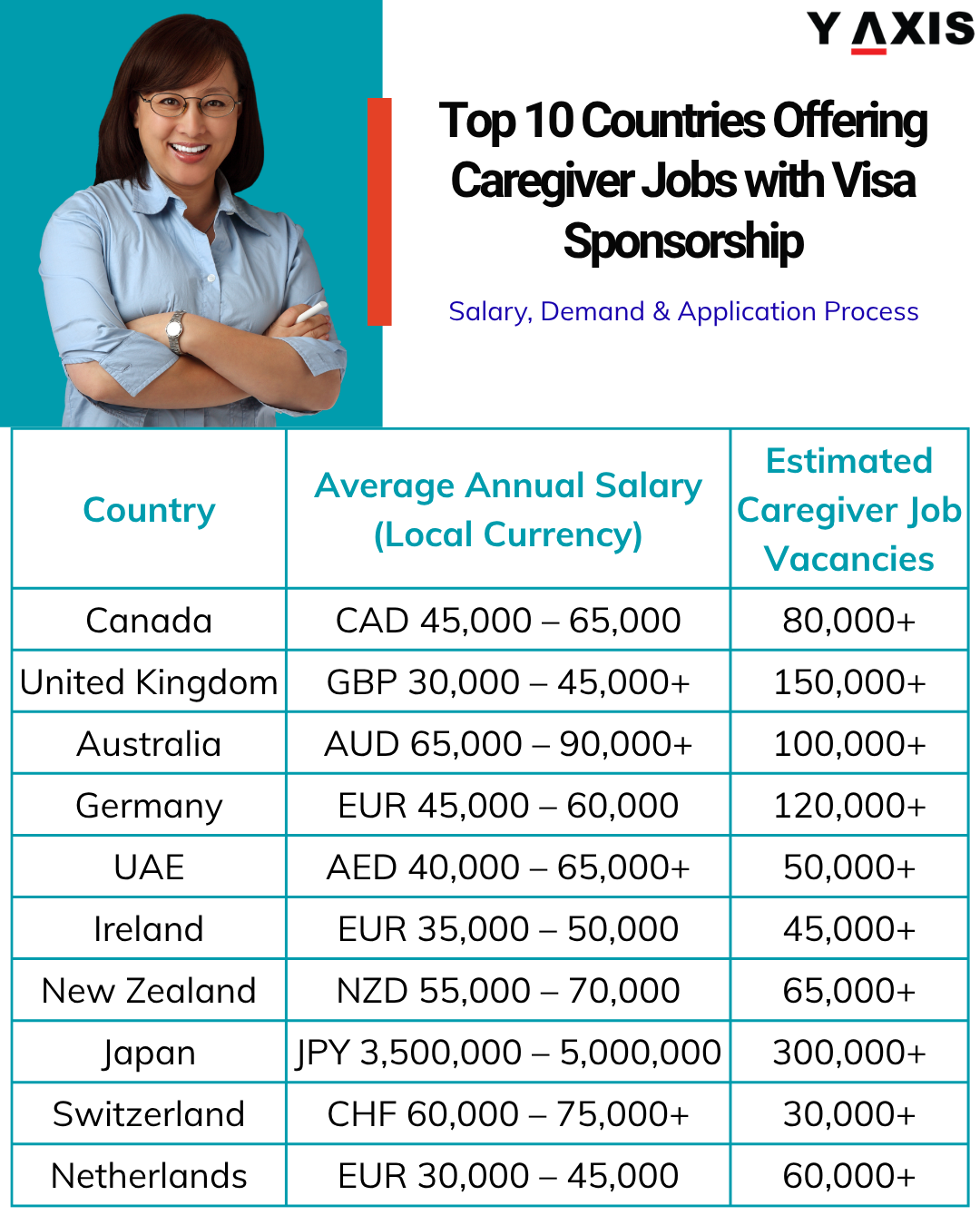
Top 10 Countries Offering Caregiver Jobs with Visa Sponsorship
Top 10 Countries Offering Caregiver Jobs with Visa Sponsorship
The top 10 countries offering caregiver jobs with visa sponsorship include the United Kingdom, Canada, Australia, Germany, Ireland, New Zealand, Japan, the Netherlands, Switzerland, and the United Arab Emirates (UAE). These countries actively recruit international caregivers to fill workforce shortages across care homes, assisted living facilities, home care services, and community care programs.
Global demand for caregivers is increasing rapidly due to aging populations and rising long-term care needs. According to the World Health Organization (WHO), the global healthcare system could face a shortage of around 10 million health and care workers by 2030, while the number of people aged 65 and older is expected to double worldwide by 2050. To address these shortages, many countries offer caregiver jobs with visa sponsorship, employer-sponsored work permits, competitive salaries, and long-term career opportunities for international caregivers.
*Want to work abroad? Get expert assistance from Y-Axis to find the right job faster.
Key Factors to Consider for Caregiver Jobs Abroad with Visa Sponsorship
When applying for caregiver jobs with visa sponsorship abroad, it is important to compare key factors before choosing a country. Job demand, salary, visa options, and long-term opportunities can vary across destinations. Understanding these factors helps you select the right country and improve your chances of getting hired.
Some of the key factors to consider for caregiver jobs with visa sponsorship abroad:
- Job Demand: Check countries with strong demand for caregivers and consistent job openings.
- Salary & Benefits: Compare pay, working hours, and additional benefits offered by employers.
- Visa Sponsorship: Ensure the employer provides work visa sponsorship and support with the process.
- Work Visa Rules: Understand visa requirements, duration, and renewal options in each country.
- Permanent Residency Options: Look for countries offering pathways to long-term stay or PR.
- Language Requirements: Check if English or local language skills are required for the role.
Benefits of Working Abroad as a Caregiver with Visa Sponsorship
Working abroad as a caregiver with visa sponsorship offers strong job opportunities and long-term career growth. Many countries actively hire overseas caregivers to meet rising demand in elderly care and home support services. This makes caregiver jobs abroad a reliable option for stable employment.
- High Job Demand: Many countries are actively hiring caregivers to fill workforce shortages.
- Better Salary & Benefits: Overseas roles often offer higher pay and additional benefits.
- Visa Sponsorship Support: Employers provide work visas and sponsored permits.
- Stable Employment: Caregiving offers consistent and long-term job opportunities.
- PR Opportunities: Some countries provide pathways to permanent residency.
- Career Growth: International experience helps in building long-term career prospects.
*Want to work abroad? Get expert assistance from Y-Axis to find the right job faster.
Top 10 Countries Offering Caregiver Jobs with Visa Sponsorship
Some of the top countries offering caregiver jobs with visa sponsorship include the United Kingdom, Canada, Australia, Germany, and Ireland, where demand for caregivers continues to grow. These countries recruit international caregivers to support elderly care homes, home care services, and long-term care facilities.
Caregiver roles such as care assistants, personal support workers, and home care workers are commonly offered with employer-sponsored work visas. With aging populations and expanding care services, these countries provide stable job opportunities, competitive salaries, and long-term career prospects for overseas caregivers.
List of 10 best countries for caregiver jobs with visa sponsorship include:
|
Country |
Average Annual Salary (Local Currency) |
Estimated Caregiver Job Vacancies |
|
Canada |
CAD 45,000 – 65,000 |
80,000+ |
|
United Kingdom |
GBP 30,000 – 45,000+ |
150,000+ |
|
Australia |
AUD 65,000 – 90,000+ |
100,000+ |
|
Germany |
EUR 45,000 – 60,000 |
120,000+ |
|
UAE |
AED 40,000 – 65,000+ |
50,000+ |
|
Ireland |
EUR 35,000 – 50,000 |
45,000+ |
|
New Zealand |
NZD 55,000 – 70,000 |
65,000+ |
|
Japan |
JPY 3,500,000 – 5,000,000 |
300,000+ |
|
Switzerland |
CHF 60,000 – 75,000+ |
30,000+ |
|
Netherlands |
EUR 30,000 – 45,000 |
60,000+ |
*Want to work abroad? Get expert assistance from Y-Axis to find the right job faster.
Best Countries Hiring Caregivers with Visa Sponsorship Job Opportunities
Several countries are actively hiring caregivers with visa sponsorship to address shortages in elderly care and home support services. Countries such as Canada, the United Kingdom, Australia, and Germany regularly recruit overseas caregivers to work in care homes, assisted living facilities, and home care programs.
These destinations offer employer-sponsored work visas, stable job markets, and growing demand for caregivers, making them some of the best options for international applicants seeking caregiver jobs abroad.
Some of the top countries offering visa sponsorship jobs for caregivers include:
Caregiver Jobs in UK with Visa Sponsorship
The United Kingdom is one of the top destinations for caregiver jobs with visa sponsorship due to its strong job market and a critical shortage of care workers. Many vacancies are available in care homes, assisted living facilities, and home care services. To meet this growing demand, many employers sponsor work visas for overseas caregivers and offer fast-track hiring options for caregiver jobs in the UK.
Caregivers in the UK can earn more than GBP 25,000 per year, with roles such as care assistants, support workers, home care workers, and senior caregivers offering higher pay with experience. Most caregivers are hired through the Health and Care Worker visa, which helps employers recruit faster and provides a clear pathway to permanent residency, making the UK attractive for long-term caregiver careers.
|
Factor |
Details |
|
Caregiver Job Market & Vacancies for Next Decade |
The UK care sector faces a significant workforce shortage, with over 150,000 caregiver vacancies across care homes, assisted living facilities, and home care services. Demand is expected to remain strong over the next decade. |
|
Demand for Overseas Caregivers |
Many UK care providers recruit overseas caregivers with visa sponsorship to address staff shortages in elderly care and community care services. |
|
In-Demand Caregiver Roles & Skills |
Common roles include care assistants, senior care workers, home care assistants, and support workers. Employers value skills such as elderly care support, mobility assistance, patient care, and communication. |
|
Visa Sponsorship Options for Caregivers |
The primary pathway is the Health and Care Worker Visa, which allows licensed UK employers to sponsor international caregivers. |
|
Fast-Track Work Visa Pathways |
The Health and Care Worker Visa offers faster visa processing and reduced visa fees for eligible care occupations. |
|
Permanent Residency / Long-Term Residence Opportunities |
Caregivers working in the UK may qualify for Indefinite Leave to Remain (ILR) after completing five years of residence. |
|
Training or Qualification Requirements |
Many employers prefer candidates with Level 2 or Level 3 Health and Social Care qualifications or relevant caregiving experience. |
|
Language Requirements |
Applicants must meet English language requirements, usually demonstrated through IELTS or other approved English tests. |
|
Eligibility for Dependents |
The visa allows caregivers to bring spouses and dependent children to the UK. |
|
Benefits for Family Members |
Dependents may receive spouse work rights, access to public education, and healthcare services while living in the UK. |
*Want to work in the UK? Avail Y-Axis Resume Marketing Services to find the right job faster.
Caregiver Jobs in Canada with Visa Sponsorship
Canada offers strong opportunities for caregiver jobs with visa sponsorship due to growing demand for elderly care and home support services. Many care facilities and private households actively recruit overseas caregivers to address workforce shortages. To meet this demand, employers often sponsor work permits and provide fast-track hiring options for caregiver positions across the country.
Caregivers in Canada can earn more than CAD 40,000 per year, with roles such as personal support workers, live-in caregivers, care aides, and senior care assistants offering higher pay with experience. Canada’s job market also provides employer-sponsored work permits and clear immigration pathways through category-based Express Entry draws and Provincial Nominee Programs (PNPs), offering caregivers strong opportunities for long-term careers and permanent residency.
|
Factor |
Details |
|
Caregiver Job Market & Vacancies for Next Decade |
Canada’s care sector continues to experience workforce shortages, with over 100,000 caregiver vacancies expected across long-term care homes, home care services, and community support programs over the next decade. |
|
Demand for Overseas Caregivers |
Many care providers and home care agencies recruit overseas caregivers with work permit sponsorship to support elderly care and disability support services. |
|
In-Demand Caregiver Roles & Skills |
Common roles include personal support workers (PSWs), home support workers, healthcare aides, disability support workers, and live-in caregivers. Key skills include elderly care, patient support, mobility assistance, and communication. |
|
Work Visa Options for Caregivers |
International caregivers usually work in Canada through employer-specific work permits, with long-term immigration pathways available through Express Entry and Provincial Nominee Programs (PNPs). |
|
Fast-Track Work Visa Pathways |
Category-based Express Entry draws and provincial healthcare recruitment streams often prioritise caregivers and healthcare support workers. |
|
Permanent Residency / Long-Term Residence Opportunities |
Caregivers may qualify for permanent residence through Express Entry or Provincial Nominee Programs, especially in provinces with healthcare workforce shortages. |
|
Training or Qualification Requirements |
Many employers prefer candidates with Personal Support Worker (PSW) training or healthcare aide certification, depending on provincial requirements. |
|
Language Requirements |
Applicants must demonstrate English or French proficiency, usually through approved language tests such as IELTS or TEF. |
|
Eligibility for Dependents |
Work permits and PR pathways generally allow caregivers to bring spouses and dependent children to Canada. |
|
Benefits for Family Members |
Dependents may receive spouse work rights, access to public healthcare, and public education for children. |
*Want to work in Canada? Get expert assistance from Y-Axis to find the right job faster.
Caregiver Jobs in Australia with Visa Sponsorship
Australia is a popular destination for caregiver jobs with visa sponsorship due to rising demand for elderly care and support services. As the population ages, many aged care facilities, nursing homes, and home care providers actively recruit overseas caregivers to address workforce shortages. To meet this demand, many employers sponsor work visas and offer fast-track hiring options for caregiver roles across Australia.
Caregivers in Australia can earn more than AUD 55,000 per year, with roles such as aged care workers, personal care assistants, disability support workers, and home care assistants offering higher salaries with experience. Australia’s strong job market and immigration pathways to permanent residence also create opportunities for caregivers to secure stable employment and build long-term careers.
|
Factor |
Details |
|
Caregiver Job Market & Vacancies for Next Decade |
Australia’s aged care sector is expected to create over 110,000 caregiver vacancies in the coming decade due to the country’s aging population and the expansion of home care and residential aged care services. |
|
Demand for Overseas Caregivers |
Many aged care providers and disability support services recruit overseas caregivers with visa sponsorship to address workforce shortages across Australia. |
|
In-Demand Caregiver Roles & Skills |
Common roles include aged care workers, personal care assistants, home support workers, and disability support workers. Key skills include elderly care support, mobility assistance, patient care, and communication. |
|
Work Visa Options for Caregivers |
International caregivers may work in Australia through visas such as the Skills in Demand Visa (Subclass 482), Skilled Independent Visa (189), Skilled Nominated Visa (190), and Skilled Work Regional Visa (491). |
|
Fast-Track Work Visa Pathways |
Many caregivers are recruited through employer-sponsored visas or state and territory nomination programs for priority aged care occupations. |
|
Permanent Residency / Long-Term Residence Opportunities |
Caregivers may qualify for permanent residency through skilled migration visas (189 or 190) or employer-sponsored pathways such as the Employer Nomination Scheme (186). |
|
Training or Qualification Requirements |
Many employers prefer candidates with Certificate III or IV in Individual Support (Aged Care or Disability) or similar caregiving training. |
|
Language Requirements |
Applicants must meet English language requirements, usually demonstrated through IELTS or other approved English tests. |
|
Eligibility for Dependents |
Skilled migration visas usually allow caregivers to bring spouses and dependent children to Australia. |
|
Benefits for Family Members |
Dependents may receive spouse work rights, access to public education, and Medicare eligibility, depending on visa conditions. |
*Want to work in Australia? Avail Y-Axis Resume Marketing Services to find the right job faster.
Caregiver Jobs in Germany with Visa Sponsorship
Germany is becoming an important destination for caregiver jobs with visa sponsorship as the country faces a growing shortage of care workers. With one of the largest aging populations in Europe, many nursing homes, elderly care centers, and home care providers actively recruit overseas caregivers. To address this shortage, employers often sponsor work visas and offer fast-track hiring options for caregiver roles.
Caregivers in Germany can earn more than EUR 35,000 per year, with roles such as elderly care assistants, home care workers, nursing aides, and senior care assistants offering higher pay with experience. German job market also provides EU Blue Card and skilled worker visa pathways, giving caregivers opportunities to secure stable jobs and build long-term careers.
|
Factor |
Details |
|
Caregiver Job Market & Vacancies for Next Decade |
Germany’s care sector continues to face a major workforce shortage, with over 200,000 caregiver vacancies expected in nursing homes, elderly care facilities, and home care services over the next decade. |
|
Demand for Overseas Caregivers |
Due to a shortage of local workers, many German care providers recruit overseas caregivers with visa sponsorship to support elderly care and long-term care services. |
|
In-Demand Caregiver Roles & Skills |
Common roles include elderly care assistants, nursing assistants, caregivers, and home care workers. Key skills include elderly care support, mobility assistance, patient care, and communication. |
|
Work Visa Options for Caregivers |
International caregivers typically work in Germany through the Skilled Worker Visa, EU Blue Card, or employer-sponsored work permits. |
|
Fast-Track Work Visa Pathways |
The Accelerated Skilled Worker Procedure (ASVP) allows faster visa processing and qualification recognition for eligible care sector jobs. |
|
Permanent Residency / Long-Term Residence Opportunities |
Skilled caregivers may qualify for permanent residence after several years of legal employment, depending on visa conditions and language proficiency. |
|
Training or Qualification Requirements |
Many caregiver roles require recognized vocational training in elderly care or nursing assistance, often through the German qualification recognition process (Anerkennung). |
|
Language Requirements |
Most caregiver roles require German language proficiency at B1 or B2 level, depending on the employer and care role. |
|
Eligibility for Dependents |
Skilled worker visas allow caregivers to bring spouses and dependent children to Germany. |
|
Benefits for Family Members |
Dependents may receive spouse work rights, access to public education, and Germany’s public healthcare system. |
*Want to work in Germany? Get expert assistance from Y-Axis to find right job faster.
Caregiver Jobs in Ireland with Visa Sponsorship
Ireland is gaining attention for caregiver jobs with visa sponsorship as demand for elderly care continues to rise. With an aging population and expanding healthcare services, many nursing homes, care facilities, and home care providers are actively hiring overseas caregivers. To fill workforce shortages, employers often sponsor work visas and offer fast-track hiring options for caregiver roles.
Caregivers in Ireland can earn more than EUR 30,000 per year, with roles such as healthcare assistants, care support workers, home care assistants, and senior caregivers offering higher pay with experience. Ireland’s growing job market and permanent residence pathways also create opportunities for caregivers to secure stable jobs and build long-term careers.
|
Factor |
Details |
|
Caregiver Job Market & Vacancies for Next Decade |
Ireland’s care sector continues to experience workforce shortages, with more than 25,000 caregiver vacancies expected across nursing homes, home care services, and community care programs over the next decade. |
|
Demand for Overseas Caregivers |
Many Irish healthcare providers and home care agencies recruit overseas caregivers with visa sponsorship to support elderly care and disability support services. |
|
In-Demand Caregiver Roles & Skills |
Common roles include healthcare assistants, care assistants, home care workers, disability support workers, and community care assistants. Key skills include elderly care support, mobility assistance, patient care, and communication. |
|
Work Visa Options for Caregivers |
International caregivers typically work in Ireland through the Critical Skills Employment Permit, General Employment Permit, or employer-sponsored work permits. |
|
Fast-Track Work Visa Pathways |
The Critical Skills Employment Permit offers faster processing and simplified procedures for certain healthcare-related occupations. |
|
Permanent Residency / Long-Term Residence Opportunities |
Caregivers may qualify for Stamp 4 (long-term residence) after meeting employment and residency requirements in Ireland. |
|
Training or Qualification Requirements |
Many employers prefer candidates with QQI Level 5 Healthcare Support qualification or Health Care Assistant training, or equivalent caregiving experience. |
|
Language Requirements |
Applicants must demonstrate English language proficiency, commonly through IELTS or other recognised English tests. |
|
Eligibility for Dependents |
Employment permits generally allow caregivers to bring spouses and dependent children to Ireland. |
|
Benefits for Family Members |
Dependents may receive spouse work rights and access to public education and healthcare services depending on permit conditions. |
*Want to work in Ireland? Get expert assistance from Y-Axis to find right job faster.
Caregiver Jobs in New Zealand with Visa Sponsorship
New Zealand is an emerging destination for caregiver jobs with visa sponsorship, driven by increasing demand for elderly care and disability support services. As the population continues to age, many aged care facilities, retirement homes, and home care providers actively recruit overseas caregivers. To address workforce shortages, employers often sponsor work visas and offer fast-track hiring options for caregiver roles across the country.
Caregivers in New Zealand can earn more than NZD 50,000 per year, with roles such as aged care assistants, support workers, home care aides, and disability support workers offering higher pay with experience. New Zealand’s skilled worker visa pathways also create permanent residence opportunities for caregivers to secure stable employment and develop long-term careers.
|
Factor |
Details |
|
Caregiver Job Market & Vacancies for Next Decade |
New Zealand’s aged care sector continues to face workforce shortages, with over 20,000 caregiver and aged care vacancies expected across residential care homes, home support services, and community care programs over the next decade. |
|
Demand for Overseas Caregivers |
Many aged care providers recruit overseas caregivers with visa sponsorship to support elderly care and disability support services across the country. |
|
In-Demand Caregiver Roles & Skills |
Common roles include aged care workers, healthcare assistants, home support workers, disability support workers, and community care assistants. Key skills include elderly care support, mobility assistance, patient care, and communication. |
|
Work Visa Options for Caregivers |
The most common pathway is the Accredited Employer Work Visa (AEWV), which allows approved employers to sponsor overseas caregivers. |
|
Fast-Track Work Visa Pathways |
Some aged care occupations appear on New Zealand’s Green List, which can provide faster visa processing and potential residence pathways. |
|
Permanent Residency / Long-Term Residence Opportunities |
Caregivers may qualify for residence through the Green List or the Skilled Migrant Category, depending on qualifications and work experience. |
|
Training or Qualification Requirements |
Many employers prefer candidates with Level 3 or Level 4 Health and Wellbeing qualifications or relevant caregiving experience. |
|
Language Requirements |
Applicants must demonstrate English language proficiency, usually through IELTS or other recognised English tests. |
|
Eligibility for Dependents |
Work visas generally allow caregivers to bring spouses and dependent children to New Zealand. |
|
Benefits for Family Members |
Dependents may receive spouse work rights, access to public education, and public healthcare services depending on visa conditions. |
*Want to work in New Zealand? Get expert assistance from Y-Axis to find the right job faster.
Caregiver Jobs in Japan with Visa Sponsorship
Japan is creating growing opportunities for caregiver jobs with visa sponsorship due to its rapidly aging population and increasing demand for long-term care services. Many nursing homes, elderly care centers, and rehabilitation facilities actively recruit overseas caregivers to support the country’s healthcare system. To address this shortage, employers sponsor work visas and offer structured hiring programs for caregiver roles.
Caregivers in Japan can earn more than JPY 3,000,000 per year, with roles such as care workers, nursing assistants, elderly care aides, and support staff offering higher salaries with experience. Japan also provides Specified Skilled Worker visa pathways, allowing caregivers to secure stable employment and develop long-term career opportunities.
|
Factor |
Details |
|
Caregiver Job Market & Vacancies for Next Decade |
Japan’s elderly care sector continues to face a major workforce shortage, with more than 300,000 caregiver vacancies expected across nursing homes, long-term care facilities, and home care services over the next decade. |
|
Demand for Overseas Caregivers |
Due to the country’s rapidly aging population, many care providers recruit overseas caregivers with visa sponsorship to support long-term elderly care services. |
|
In-Demand Caregiver Roles & Skills |
Common roles include caregivers, elderly care assistants, nursing assistants, and home care workers. Key skills include elderly care support, mobility assistance, patient care, and communication. |
|
Work Visa Options for Caregivers |
Foreign caregivers usually work in Japan through the Specified Skilled Worker (SSW) Visa, Technical Intern Training Program (TITP), or employer-sponsored work visas. |
|
Fast-Track Work Visa Pathways |
The Specified Skilled Worker (SSW) program allows employers to recruit international caregivers more quickly to address labour shortages in the care sector. |
|
Permanent Residency / Long-Term Residence Opportunities |
Caregivers may become eligible for long-term residence or permanent residency after meeting residence and employment requirements. |
|
Training or Qualification Requirements |
Some caregiver roles require caregiving certification or passing Japan’s caregiving skills examinations for foreign workers. |
|
Language Requirements |
Applicants typically need Japanese language proficiency at JLPT N4 level or higher, depending on the visa program and employer requirements. |
|
Eligibility for Dependents |
Certain visa categories allow caregivers to bring spouses and dependent children to Japan. |
|
Benefits for Family Members |
Dependents may receive access to public education, healthcare services, and residence rights depending on visa conditions. |
*Want to work in Japan? Get expert assistance from Y-Axis to find right job faster.
Caregiver Jobs in the Netherlands with Visa Sponsorship
The Netherlands has growing demand for caregiver jobs with visa sponsorship as the country’s aging population continues to increase. Many elderly care homes, rehabilitation centers, and home care providers recruit overseas caregivers to support healthcare services. To address workforce shortages, some employers sponsor work visas and offer fast-track hiring options for caregiver roles.
Caregivers in the Netherlands can earn more than EUR 32,000 per year, with roles such as care assistants, home care workers, support workers, and elderly care aides offering higher pay with experience. With steady hiring and long-term residence options, the Netherlands offers caregivers opportunities to secure stable jobs and grow their careers long term.
|
Factor |
Details |
|
Caregiver Job Market & Vacancies for Next Decade |
The Netherlands is expected to face a growing shortage of care workers, with around 60,000 caregiver and healthcare support vacancies projected over the next decade across elderly care homes, home care services, and community care programs. |
|
Demand for Overseas Caregivers |
Some healthcare providers and elderly care facilities recruit overseas caregivers through employer-sponsored work permits to help address workforce shortages. |
|
In-Demand Caregiver Roles & Skills |
Common roles include care assistants, elderly care aides, home care workers, and personal support workers. Key skills include elderly care support, mobility assistance, patient care, and communication. |
|
Work Visa Options for Caregivers |
Foreign caregivers usually work in the Netherlands through employer-sponsored work permits or the Highly Skilled Migrant visa when hired by recognized Dutch employers. |
|
Fast-Track Work Visa Pathways |
Employers registered with the Immigration and Naturalisation Service (IND) may sponsor foreign workers through faster visa processing procedures. |
|
Permanent Residency / Long-Term Residence Opportunities |
Workers may become eligible for permanent residence after five years of continuous legal residence and employment in the Netherlands. |
|
Training or Qualification Requirements |
Some caregiver roles require recognized healthcare or caregiving qualifications, and foreign credentials may need evaluation by Dutch authorities. |
|
Language Requirements |
Dutch language proficiency is often required, especially for positions involving direct patient care. |
|
Eligibility for Dependents |
Work permit holders can bring spouses and dependent children to live in the Netherlands. |
|
Benefits for Family Members |
Dependents may receive spouse work rights, access to public education, and healthcare services while residing in the Netherlands. |
*Want to work in Netherlands? Get expert assistance from Y-Axis to find right job faster.
Caregiver Jobs in Switzerland with Visa Sponsorship
Switzerland is known for offering some of the highest-paying caregiver jobs abroad, supported by strong demand for elderly care and home support services. Many private households, elderly care facilities, and home care providers hire overseas caregivers to support long-term care needs. To address workforce shortages, some employers sponsor work permits and recruit international caregivers for specialized care roles.
Caregivers in Switzerland can earn more than CHF 60,000 per year, with roles such as home caregivers, personal care assistants, elderly care aides, and live-in caregivers offering higher pay with experience. With competitive salaries, long-term residence options and a strong healthcare system, Switzerland provides caregivers opportunities to secure well-paid positions and build stable careers.
|
Factor |
Details |
|
Caregiver Job Market & Vacancies for Next Decade |
Switzerland’s care sector continues to experience workforce shortages, with more than 30,000 caregiver vacancies expected across elderly care homes, home care services, and long-term care facilities over the next decade. |
|
Demand for Overseas Caregivers |
Many care providers and home care agencies recruit overseas caregivers with employer-sponsored work permits to support elderly care services. |
|
In-Demand Caregiver Roles & Skills |
Common roles include caregivers, elderly care assistants, nursing assistants, and home care workers. Key skills include elderly care support, mobility assistance, patient care, and communication. |
|
Work Visa Options for Caregivers |
Foreign caregivers usually work in Switzerland through employer-sponsored work permits such as L permits or B permits, issued by cantonal authorities. |
|
Fast-Track Work Visa Pathways |
Employers may recruit caregivers through employer-sponsored permits processed by cantonal immigration offices, which can help fill urgent care sector roles. |
|
Permanent Residency / Long-Term Residence Opportunities |
Care workers may become eligible for permanent residence (C Permit) after meeting residence and integration requirements. |
|
Training or Qualification Requirements |
Some caregiver roles require recognition of foreign qualifications, often through cantonal authorities or the Swiss Red Cross. |
|
Language Requirements |
Caregivers usually need proficiency in German, French, or Italian, depending on the canton where they work. |
|
Eligibility for Dependents |
Work permits typically allow caregivers to bring spouses and dependent children to Switzerland. |
|
Benefits for Family Members |
Dependents may receive spouse work rights, access to public education, and Switzerland’s healthcare system. |
*Want to work in Switzerland? Get expert assistance from Y-Axis to find right job faster.
Caregiver Jobs in UAE with Visa Sponsorship
The United Arab Emirates (UAE) also offers growing opportunities for caregiver jobs with visa sponsorship, supported by increasing demand for home care and elderly support services. Many private households, home care agencies, and healthcare providers hire caregivers to assist elderly individuals and patients who need daily support. To meet this demand, employers often sponsor work visas and provide quick hiring for caregiver roles.
Caregivers in the UAE can earn more than AED 30,000 per year, with roles such as home caregivers, personal care assistants, live-in caregivers, and elderly care aides offering higher pay with experience. With fast-track hiring options and a strong healthcare sector, the UAE provides caregivers opportunities to secure stable employment and build valuable international experience.
|
Factor |
Details |
|
Caregiver Job Market & Vacancies for Next Decade |
The UAE care sector continues to expand, with over 50,000 caregiver vacancies expected across home care services, elderly care support, and healthcare facilities over the next decade. |
|
Demand for Overseas Caregivers |
Many home care agencies, private households, and healthcare providers recruit overseas caregivers to support elderly care and personal assistance services. |
|
In-Demand Caregiver Roles & Skills |
Common roles include caregivers, home care assistants, personal care aides, and elderly care workers. Key skills include patient support, mobility assistance, elderly care, and communication. |
|
Work Visa Options for Caregivers |
Foreign caregivers typically work in the UAE through employer-sponsored work visas, which allow companies and households to legally hire overseas workers. |
|
Fast-Track Work Visa Pathways |
Employer-sponsored UAE work visas are commonly used for faster recruitment of caregivers and healthcare support staff. |
|
Long-Term Residence Opportunities |
Long-term residence options may be available through renewable employment visas or long-term residency programs such as the UAE Golden Visa for eligible professionals. |
|
Training or Qualification Requirements |
Some caregiver roles require basic caregiving training or experience, depending on employer requirements and emirate regulations. |
|
Language Requirements |
English proficiency is usually required, while knowledge of Arabic can be an advantage but is not mandatory. |
|
Eligibility for Dependents |
Caregivers working in the UAE may sponsor spouses and dependent children if they meet minimum salary and residency requirements. |
|
Benefits for Family Members |
Dependents may receive family residency visas, access to private education, and healthcare services in the UAE. |
*Want to work in the UAE? Avail Y-Axis Resume Marketing Services to find the right job faster.
Eligibility Requirements for Caregiver Jobs with Visa Sponsorship
To apply for caregiver jobs with visa sponsorship, applicants must meet basic requirements set by employers and immigration authorities. These requirements usually focus on caregiving experience, communication skills, and eligibility for a work visa.
Key eligibility requirements for caregiver jobs with visa sponsorship:
- Caregiving Experience: Many employers prefer 1–2 years of experience in elderly or home care.
- Relevant Training: Caregiver or healthcare assistant training can improve job opportunities.
- Language Skills: Basic English proficiency is usually required for communication.
- Valid Passport: A valid passport is needed to apply for a work visa.
- Health & Background Checks: Medical exams and police clearance may be required.
- Employer Job Offer: A job offer from an employer providing visa sponsorship is required.
Step-by-Step Application Process for Caregiver Jobs with Visa Sponsorship
Step 1: Check the eligibility requirements, experience, and language criteria for caregiver jobs in your chosen country.
Step 2: Prepare a resume highlighting your caregiving experience, training, and relevant skills.
Step 3: Search for caregiver jobs with visa sponsorship through employers, recruitment agencies, or job portals.
Step 4: Submit applications and attend online interviews with employers or hiring agencies.
Step 5: Receive a job offer from an employer willing to provide visa sponsorship.
Step 6: Complete the required documents and apply for the work visa to start your caregiver job abroad.
*Want to work in the UAE? Avail Y-Axis Resume Marketing Services to find the right job faster.
FAQs
Which countries offer caregiver jobs with visa sponsorship for foreigners?
Several countries offer caregiver jobs with visa sponsorship for foreigners because of rising demand for elderly care workers. Popular destinations include the United Kingdom, Canada, Australia, Germany, Ireland, New Zealand, Japan, Switzerland, the Netherlands, and the UAE. These countries regularly recruit international workers for caregiver jobs abroad through employer-sponsored work visas, helping address shortages in elderly care facilities, nursing homes, and private home care services.
What is the best country to work as a caregiver abroad?
The best country for caregiver jobs abroad with visa sponsorship depends on salary levels, job demand, and immigration opportunities. Countries such as Canada, the United Kingdom, Australia, and Switzerland are often considered attractive destinations because they offer stable employment, competitive salaries, and strong demand for caregivers. Many international job seekers prefer these countries hiring caregivers due to reliable employment conditions and structured work visa programs.
Are caregiver jobs abroad easy to get with visa sponsorship?
Caregiver jobs abroad can be easier to obtain compared to many other international jobs because many countries face a shortage of care workers. Employers frequently recruit foreign workers to support elderly care services. Applicants with caregiving training or experience have stronger chances of securing caregiver jobs with visa sponsorship, especially in countries actively hiring caregivers for nursing homes and home care roles.
How much do caregivers earn in different countries?
Salaries for caregiver jobs abroad vary widely depending on the country, employer, and experience level. Caregivers working in countries with strong healthcare systems often receive higher pay and benefits. Some destinations known for higher salaries include Switzerland, Australia, Canada, and the United Kingdom. These countries hiring caregivers frequently offer competitive compensation to attract skilled international workers for caregiver roles.
Do caregiver jobs abroad require certifications or training?
Many caregiver jobs abroad with visa sponsorship require basic caregiving training or relevant work experience. Employers often prefer candidates with caregiving certificates, nursing assistant training, or first aid qualifications. While some entry-level positions provide on-the-job training, candidates with formal certifications usually have better opportunities when applying for international caregiver jobs abroad through employers offering work visa sponsorship.
Where can I apply for caregiver jobs abroad with visa sponsorship?
Applicants looking for caregiver jobs abroad with visa sponsorship can search through international job portals, caregiving recruitment agencies, and employer career websites. Many companies advertise caregiver positions specifically for foreign workers. Job seekers should focus on verified platforms that list countries hiring caregivers, ensuring they apply only to legitimate employers offering work visa sponsorship for international candidates.
Which country has the highest demand for caregivers?
Countries with aging populations usually have the highest demand for caregivers. Nations such as the United Kingdom, Germany, Japan, Canada, and Australia regularly recruit foreign workers for caregiver positions. These countries hiring caregivers rely on international applicants to support elderly care services. As a result, many employers advertise caregiver jobs abroad with visa sponsorship to attract skilled workers from different countries.
Can I work abroad as a caregiver without a nursing degree?
Yes, many caregiver jobs abroad do not require a full nursing degree. Employers often hire caregivers with practical experience in elderly care or basic caregiving training. Responsibilities usually include assisting with daily activities, providing companionship, and supporting mobility. Candidates searching for caregiver jobs with visa sponsorship can qualify with caregiving certificates or home care experience rather than advanced medical qualifications.
Do employers sponsor visas for caregiver jobs abroad?
Yes, many employers sponsor visas for caregiver jobs abroad because local labour shortages make it difficult to find enough caregivers domestically. Employers in countries hiring caregivers often support foreign workers by sponsoring work visas. This allows international candidates to legally work in elderly care facilities or private households while filling essential roles in caregiving services.
Is the demand for caregivers increasing worldwide?
Yes, global demand for caregivers continues to increase due to rapidly aging populations and growing healthcare needs. Many developed countries require more caregivers to support elderly individuals in homes and long-term care facilities. Because of this shortage, caregiver jobs abroad with visa sponsorship are expanding, providing international workers with more opportunities to find employment in countries hiring caregivers worldwide.
Are live-in caregiver jobs abroad available with visa sponsorship?
Yes, many countries offer live-in caregiver jobs abroad with visa sponsorship, especially in the United Kingdom, Canada, Australia, and Ireland. In these roles, caregivers live in the employer’s home and assist elderly individuals with daily activities such as meal preparation, personal care, and companionship. Live-in caregiver jobs abroad often include free accommodation, meals, and stable employment contracts, making them a common option for international caregivers.
What skills are required for caregiver jobs abroad?
Employers hiring for caregiver jobs abroad with visa sponsorship usually require practical caregiving skills and strong personal qualities. Important skills include elderly care assistance, mobility support, medication reminders, meal preparation, and communication skills. Many countries hiring caregivers also prefer candidates with caregiving certificates, first aid training, or experience in home care or nursing support, which improves eligibility for international caregiver jobs.
How long does it take to get a caregiver work visa?
The processing time for a caregiver work visa depends on the country and employer sponsorship process. In many countries offering caregiver jobs with visa sponsorship, the visa process can take 4 to 12 weeks after receiving a job offer. Employers typically submit documents to immigration authorities before the caregiver applies for the work visa, allowing foreign workers to legally start caregiver jobs abroad.
What documents are required to apply for caregiver jobs abroad?
Applicants applying for caregiver jobs abroad with visa sponsorship usually need a valid passport, professional resume, caregiving training certificates, and proof of relevant work experience. Some countries hiring caregivers also request medical examinations, police clearance certificates, and language proficiency documents. Preparing these documents in advance helps international applicants apply successfully for caregiver jobs abroad.
Which countries offer the highest salaries for caregiver jobs abroad?
Some countries offer higher salaries for caregiver jobs abroad with visa sponsorship due to strong healthcare systems and high living standards. Countries such as Switzerland, Australia, Canada, and the United Kingdom often provide competitive pay for caregivers working in elderly care facilities or private households. Many international workers search for these highest-paying countries for caregiver jobs abroad when considering migration opportunities.
Are caregiver jobs abroad available without experience?
Some caregiver jobs abroad are available for beginners, especially in home care or live-in caregiver positions where employers provide basic training. Countries hiring caregivers sometimes recruit entry-level workers who demonstrate compassion, reliability, and willingness to support elderly individuals. While experience improves opportunities, many caregiver jobs with visa sponsorship focus on practical caregiving ability rather than extensive professional experience.
Do caregiver jobs abroad include accommodation and benefits?
Many caregiver jobs abroad with visa sponsorship include benefits to support foreign workers relocating for employment. These benefits may include free accommodation, meals, transportation support, and health insurance depending on the employer. Live-in caregiver roles frequently provide housing within the employer’s home. These additional benefits make caregiver jobs abroad more attractive for international workers seeking stable opportunities.
Is there a global shortage of caregivers?
Yes, many countries are currently experiencing a shortage of caregivers, especially in elderly care and long-term support services. Aging populations in countries like the United Kingdom, Canada, Germany, and Japan have increased demand for professional caregivers. Because of this shortage, many governments and employers actively recruit foreign workers through caregiver jobs with visa sponsorship to fill essential care positions.
Can caregiver jobs abroad lead to permanent residence?
In some countries, caregiver jobs abroad with visa sponsorship can lead to long-term immigration opportunities. Certain immigration programs allow foreign caregivers to continue working for several years and eventually apply for permanent residence. Countries facing caregiver shortages may create special pathways for skilled workers, making caregiver jobs abroad a potential route for building a stable career internationally.
What is the future demand for caregiver jobs abroad?
The demand for caregiver jobs abroad is expected to grow significantly over the next decade due to aging populations and increasing healthcare needs. Many countries hiring caregivers will continue recruiting international workers to support elderly care services. As a result, caregiver jobs with visa sponsorship are likely to remain one of the most accessible job opportunities for foreign workers seeking employment abroad.
Posted on March 20 2026
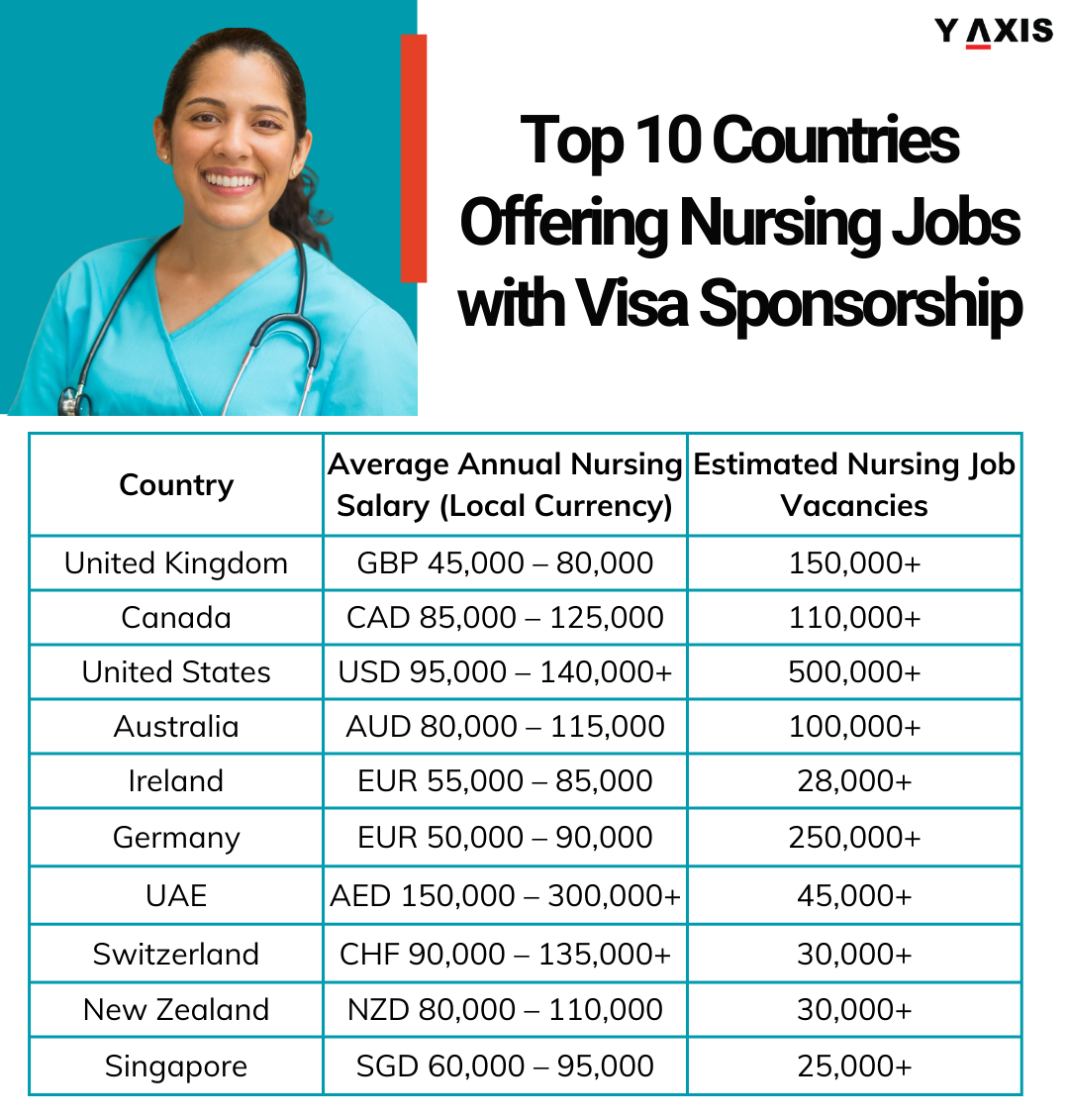
Top 10 Countries Offering Nursing Jobs with Visa Sponsorship
Top 10 Countries Offering Nursing Jobs with Visa Sponsorship
The top 10 countries offering nursing jobs with visa sponsorship include the United States, United Kingdom, Canada, Australia, Germany, Ireland, Switzerland, New Zealand, Singapore, and the United Arab Emirates (UAE). These countries actively recruit internationally trained nurses to address workforce shortages across hospitals, aged-care facilities, and community healthcare services.
Demand is particularly high for roles such as registered nurses, ICU nurses, emergency nurses, mental health nurses, and aged-care nurses as healthcare systems expand to support ageing populations and rising patient needs. According to the World Health Organization (WHO), the global nursing workforce reached around 29.8 million nurses, yet many countries continue to face shortages and rely on international recruitment. To address these gaps, healthcare employers are offering nursing jobs with visa sponsorship, competitive salaries, relocation support, and long-term career opportunities for qualified international nurses.
*Want to work abroad? Get expert assistance from Y-Axis to find the right job faster.
Top 10 Countries Offering Nursing Jobs with Visa Sponsorship
Many healthcare systems are facing nursing shortages due to ageing populations and growing healthcare needs. In the United States alone, nursing employment is projected to grow by about 6%, creating significant job opportunities for qualified professionals.
To fill these workforce gaps, hospitals, healthcare providers, and aged-care organisations in countries such as the United States, United Kingdom, Canada, Australia, Germany, and Ireland are actively recruiting international nurses and offering nursing jobs with visa sponsorship, competitive salaries often exceeding USD 80,000 annually, and clear employment pathways for qualified professionals.
Some of the best countries offering nursing jobs with visa sponsorship include:
|
Country |
Average Annual Nursing Salary (Local Currency) |
Estimated Nursing Job Vacancies |
|
United Kingdom |
GBP 45,000 – 80,000 |
150,000+ |
|
Canada |
CAD 85,000 – 125,000 |
110,000+ |
|
United States |
USD 95,000 – 140,000+ |
500,000+ |
|
Australia |
AUD 80,000 – 115,000 |
100,000+ |
|
Ireland |
EUR 55,000 – 85,000 |
28,000+ |
|
Germany |
EUR 50,000 – 90,000 |
250,000+ |
|
UAE |
AED 150,000 – 300,000+ |
45,000+ |
|
Switzerland |
CHF 90,000 – 135,000+ |
30,000+ |
|
New Zealand |
NZD 80,000 – 110,000 |
30,000+ |
|
Singapore |
SGD 60,000 – 95,000 |
25,000+ |
*Want to work abroad? Get expert assistance from Y-Axis to find the right job faster.
Benefits of Working Abroad as a Nurse with Visa Sponsorship
Nursing professionals are in high demand across many countries due to healthcare workforce shortages and ageing populations. As a result, many countries offer nursing jobs with visa sponsorship, competitive salaries, and long-term career opportunities for internationally qualified nurses.
Some of the key benefits for nursing jobs abroad with visa sponsorship:
- Competitive Salaries: Experienced nurses in major healthcare markets can earn over USD 80,000 annually.
- High Job Demand: Countries such as the US, UK, Canada, and Germany have tens of thousands of nursing vacancies.
- Career Growth: International experience can lead to specialised roles and leadership opportunities.
- Permanent Residence Options: Many countries offer PR pathways for skilled nurses.
- Employee Benefits: Nurses may receive health insurance, paid leave, and relocation support.
Best Countries Offering Nursing Jobs with Visa Sponsorship
The global demand for nurses is rising rapidly as healthcare systems face growing pressure from ageing populations and increasing medical needs. According to the World Health Organization, the world could face a shortage of around 4.5 million nurses by 2030, leading many countries to recruit internationally trained nurses.
To address these shortages, several countries are offering nursing jobs with visa sponsorship, competitive salaries, and long-term career opportunities for qualified international nurses. The countries listed below stand out for their strong demand for nurses, clear visa pathways, and attractive employment prospects.
Nursing Jobs in the UK with Visa Sponsorship
The United Kingdom is one of the top destinations for nursing jobs abroad with visa sponsorship, as the country continues to experience a shortage of nursing professionals. The UK has a strong job market for nurses, and hospitals across the country, particularly through the National Health Service (NHS), actively recruit international nurses to fill thousands of vacancies. Many employers offer fast-track hiring options and provide employer-sponsored work visas, helping qualified nurses start working in the UK healthcare system more easily.
Nurses working in the UK can earn more than £80,000 per year, depending on experience and specialization. With competitive salaries, strong career prospects, and long-term residence opportunities, the United Kingdom remains an attractive destination for nurses seeking rewarding careers abroad.
|
Factor |
Details |
|
Nursing Job Market & Job Vacancies for the Next Decade |
The UK nursing job market is stable and expected to remain strong for the next decade, with over 150,000 nursing vacancies projected due to workforce shortages across the NHS and private healthcare sector. |
|
Investment in the Nursing Sector |
The UK invests over £200 billion annually in the NHS, supporting hospital expansion, workforce recruitment, nursing training programmes, and digital health initiatives that sustain demand for nursing professionals. |
|
In-Demand Nursing Roles & Skills |
High demand in the UK for registered nurses, mental health nurses, ICU nurses, elderly care nurses, community nurses, and specialist nurses, particularly those with strong patient care, clinical assessment, and care planning skills. |
|
Visa Sponsorship Programs for Nurses |
Health and Care Worker Visa and Skilled Worker Visa, typically sponsored by NHS trusts and approved healthcare employers. |
|
Fast-Track Visa Options for Nurses |
The Health and Care Worker Visa offers priority processing, reduced application fees, and exemption from the Immigration Health Surcharge. |
|
PR / Long-Term Residence Opportunities |
Nurses may become eligible for Indefinite Leave to Remain (ILR) after completing the required qualifying residence period in the UK. |
|
Licensing & Registration Requirements |
Overseas nurses must obtain registration with the Nursing and Midwifery Council (NMC), including passing the CBT and OSCE examinations. |
|
Language Requirements |
English proficiency must be demonstrated through IELTS or OET, as required by the NMC. |
|
Eligibility for Dependents |
Nurses can bring spouses and dependent children when moving to the UK for work. |
|
Benefits for Family Members |
Dependents may receive spouse work rights, access to public education for children, and NHS healthcare, subject to visa conditions. |
*Want to work in the UK? Avail Y-Axis Resume Marketing Services to find the right job faster.
Nursing Jobs in Canada with Visa Sponsorship
Canada is one of the most attractive destinations for nursing jobs abroad with visa sponsorship, as the country continues to face a growing shortage of healthcare professionals. The demand for skilled nurses is increasing across several provinces, including Ontario, British Columbia, and Alberta. Hospitals and healthcare institutions actively recruit international nurses to support the expanding healthcare system and address workforce gaps.
Canada has a strong job market for nurses, and many healthcare employers provide employer-sponsored work permits for qualified candidates. Nurses working in Canada can earn more than CAD 125,000 per year, depending on experience, specialization, and location. With competitive salaries, stable employment, fast-track hiring options and clear pathways to permanent residency, Canada remains one of the top destinations for nurses seeking long-term career opportunities abroad.
|
Factor |
Details |
|
Nursing Job Market & Job Vacancies for the Next Decade |
The Canadian nursing job market is expected to remain strong for the next decade, with over 110,000 nursing vacancies projected due to retirements, an ageing population, and healthcare expansion across provinces. |
|
Investment in the Nursing Sector |
The Canadian government invests CAD 14.3 million to address health sector labour shortages, with nearly CAD 200 billion committed over the next decade to support hospitals, long-term care services, and expansion of the nursing workforce. |
|
In-Demand Nursing Roles & Skills |
High demand for registered nurses, licensed practical nurses, mental health nurses, ICU and emergency nurses, community nurses, and aged-care nurses, particularly those with strong clinical and patient care skills. |
|
Visa Sponsorship Programs for Nurses |
Employer-specific work permits, Provincial Nominee Program work permits, and Temporary Foreign Worker pathways. |
|
Fast-Track Visa Options for Nurses |
Category-based Express Entry draws and provincial healthcare recruitment streams offering priority processing for nurses. |
|
PR / Long-Term Residence Opportunities |
Permanent residence pathways available through Express Entry and Provincial Nominee Programs (PNPs). |
|
Licensing & Registration Requirements |
Mandatory registration with the provincial nursing regulatory body in the province of employment. |
|
Language Requirements |
English or French proficiency required through IELTS, CELPIP, or TEF, depending on provincial requirements. |
|
Eligibility for Dependents |
Nurses can bring spouses and dependent children when moving to Canada for work. |
|
Benefits for Family Members |
Dependents may receive spouse work rights, access to public education for children, and publicly funded healthcare after eligibility. |
*Want to work in Canada? Get expert assistance from Y-Axis to find the right job faster.
Nursing Jobs in Australia with Visa Sponsorship
Australia is a leading destination for nursing jobs abroad with visa sponsorship, as the country continues to experience strong demand for qualified healthcare professionals. The healthcare sector is expanding rapidly, creating a stable job market for nurses across hospitals, clinics, and aged care facilities. Many healthcare employers actively recruit international nurses to address workforce shortages and support the growing healthcare system.
Many hospitals and healthcare organizations offer employer-sponsored work visas and streamlined recruitment processes for skilled nurses. Nurses working in Australia can earn more than AUD 115,000 per year, depending on experience, specialization, and location. With competitive salaries, fast-track hiring options and permanent residence opportunities, Australia remains an attractive destination for nurses seeking rewarding careers abroad.
|
Factor |
Details |
|
Nursing Job Market & Job Vacancies for the Next Decade |
The Australian nursing job market is expected to remain strong for the next decade, with over 100,000 nursing vacancies projected due to workforce shortages, an ageing population, and expanding healthcare and aged-care services. |
|
Investment in the Nursing Sector |
Australia continues to increase healthcare funding, with annual spending exceeding AUD 140 billion, supporting public hospitals, aged care, digital health initiatives, and expansion of the nursing workforce. |
|
In-Demand Nursing Roles & Skills |
High demand for registered nurses, aged-care nurses, mental health nurses, ICU and emergency nurses, community nurses, and specialist nurses, particularly those with strong clinical and patient care skills. |
|
Visa Sponsorship Programs for Nurses |
Skills in Demand Visa (Subclass 482), Skilled Independent (189), Skilled Nominated (190), Employer Nomination Scheme (186), and Skilled Work Regional (491). |
|
Fast-Track Visa Options for Nurses |
Employer-sponsored visas and state or territory nomination pathways offering priority processing for nursing occupations. |
|
PR / Long-Term Residence Opportunities |
Permanent residence pathways include points-based visas (189/190), employer-sponsored PR (186), and regional pathways (491 leading to PR). |
|
Licensing & Registration Requirements |
Mandatory registration with the Australian Health Practitioner Regulation Agency (AHPRA). |
|
Language Requirements |
English proficiency required through IELTS, OET, or equivalent tests, as per AHPRA standards. |
|
Eligibility for Dependents |
Nurses can bring spouses and dependent children when moving to Australia for work. |
|
Benefits for Family Members |
Dependents may receive spouse work rights, access to public education, and public healthcare benefits, depending on visa type. |
*Want to work in Australia? Avail Y-Axis Resume Marketing Services to find the right job faster.
Nursing Jobs in Ireland with Visa Sponsorship
Ireland is becoming an increasingly popular destination for nursing jobs abroad with visa sponsorship, as the country continues to face a shortage of qualified healthcare professionals. The Irish healthcare system, including public hospitals and private healthcare facilities, actively recruits international nurses to meet the growing demand for medical services. This has created a strong job market for nurses across the country.
Many healthcare employers in Ireland offer fast-track hiring options and provide employer-sponsored work visas for qualified nurses. Nurses working in Ireland can earn more than €85,000 per year, depending on experience and specialization. With competitive salaries, stable employment, and opportunities for long-term residence, Ireland continues to attract nurses seeking rewarding international career opportunities.
|
Factor |
Details |
|
Nursing Job Market & Job Vacancies for the Next Decade |
The Irish nursing job market is expected to remain strong for the next decade, with over 28,000 nursing vacancies projected due to staff shortages, population ageing, and continued healthcare expansion. |
|
Investment in the Nursing Sector |
Ireland continues to increase healthcare funding, including €9.25 billion under the National Development Plan and a record €27.4 billion annual health budget, supporting hospital expansion, community care, digital health initiatives, and growth of the nursing workforce. |
|
In-Demand Nursing Roles & Skills |
High demand for registered nurses, mental health nurses, elderly care nurses, ICU nurses, community nurses, and specialist nurses, particularly those with strong clinical and patient care skills. |
|
Visa Sponsorship Programs for Nurses |
General Employment Permit and Critical Skills Employment Permit, typically sponsored by approved healthcare employers. |
|
Fast-Track Visa Options for Nurses |
The Critical Skills Employment Permit provides priority processing for nursing and other healthcare roles in high demand. |
|
PR / Long-Term Residence Opportunities |
Nurses may become eligible for Stamp 4 residence after completing the required employment period in Ireland. |
|
Licensing & Registration Requirements |
Mandatory registration with the Nursing and Midwifery Board of Ireland (NMBI). |
|
Language Requirements |
English proficiency required through IELTS, OET, or recognised qualifications. |
|
Eligibility for Dependents |
Nurses can bring spouses and dependent children when moving to Ireland for work. |
|
Benefits for Family Members |
Dependents may receive spouse work rights, access to public education for children, and public healthcare services, subject to residence status. |
*Want to work in Ireland? Get expert assistance from Y-Axis to find right job faster.
Nursing Jobs in Germany with Visa Sponsorship
Germany is one of the fastest-growing destinations for nursing jobs abroad with visa sponsorship, as the country faces a significant shortage of healthcare professionals. The aging population and expanding healthcare services have created a strong job market for nurses across hospitals, rehabilitation centers, and elderly care facilities. Many healthcare institutions actively recruit international nurses to fill these workforce gaps.
Many employers provide fast-track hiring options and offer employer-sponsored work visas for qualified nurses. Nurses working in Germany can earn more than €90,000 per year, depending on experience and specialization. With stable employment, strong career prospects, and opportunities for long-term residence, Germany remains an attractive destination for nurses seeking international career opportunities.
|
Factor |
Details |
|
Nursing Job Market & Job Vacancies for the Next Decade |
The German nursing job market is expected to remain strong for the next decade, with over 250,000 nursing vacancies projected due to population ageing and rising healthcare demand. |
|
Investment in the Nursing Sector |
Germany continues to invest heavily in healthcare, with spending exceeding €538 billion, supported by a €50 billion Hospital Transformation Fund aimed at modernising hospitals by 2030, expanding digital health services, and strengthening the nursing workforce. |
|
In-Demand Nursing Roles & Skills |
High demand for registered nurses, geriatric nurses, hospital nurses, ICU nurses, elderly care nurses, and specialist nurses, particularly those with strong patient care and clinical skills. |
|
Visa Sponsorship Programs for Nurses |
Skilled Worker Work Visa and EU Blue Card, typically sponsored by approved healthcare employers. |
|
Fast-Track Visa Options for Nurses |
Accelerated skilled worker procedure and employer-supported qualification recognition to speed up hiring of qualified nurses. |
|
PR / Long-Term Residence Opportunities |
Nurses may become eligible for permanent residence after the required residence period, with accelerated options available for skilled workers. |
|
Licensing & Registration Requirements |
Mandatory recognition of nursing qualifications (Anerkennung) and registration with the relevant State Nursing Authority. |
|
Language Requirements |
German language proficiency required, typically B1 or B2 level, depending on the employer and region. |
|
Eligibility for Dependents |
Nurses can bring spouses and dependent children when moving to Germany for work. |
|
Benefits for Family Members |
Dependents may receive spouse work rights, access to public education, and public healthcare coverage after registration. |
*Want to work in Germany? Get expert assistance from Y-Axis to find right job faster.
Nursing Jobs in New Zealand with Visa Sponsorship
New Zealand is a popular destination for nursing jobs abroad with visa sponsorship, as the country continues to face a shortage of healthcare professionals across hospitals and healthcare facilities. The growing demand for medical services has created a stable job market for nurses, and healthcare providers actively recruit international nurses to support the healthcare system.
Many employers offer fast-track hiring options and provide employer-sponsored work visas for qualified candidates. Nurses working in New Zealand can earn more than NZD 70,000 per year, depending on experience and specialization. With competitive salaries, strong career prospects, and opportunities for permanent residency, New Zealand remains an attractive destination for nurses seeking international career opportunities.
|
Factor |
Details |
|
Nursing Job Market & Job Vacancies for the Next Decade |
The New Zealand nursing job market is expected to remain strong for the next decade, with over 30,000 nursing vacancies projected due to workforce shortages, an ageing population, and increasing healthcare demand across hospitals and community care services. |
|
Investment in the Nursing Sector |
New Zealand continues to strengthen its healthcare system, with annual healthcare spending exceeding NZD 28 billion, supporting hospital upgrades, workforce recruitment, digital health initiatives, and expansion of the nursing workforce. |
|
In-Demand Nursing Roles & Skills |
High demand for registered nurses, aged-care nurses, mental health nurses, ICU and emergency nurses, community nurses, and specialist nurses, particularly those with strong clinical and patient care skills. |
|
Visa Sponsorship Programs for Nurses |
Accredited Employer Work Visa (AEWV) sponsored by approved healthcare employers. |
|
Fast-Track Visa Options for Nurses |
Green List Straight to Residence pathway and employer-sponsored Accredited Employer Work Visa offering priority processing for nurses. |
|
PR / Long-Term Residence Opportunities |
Nurses may qualify for Straight to Residence visas or Work to Residence pathways under the Green List system. |
|
Licensing & Registration Requirements |
Mandatory registration with the Nursing Council of New Zealand (NCNZ). |
|
Language Requirements |
English proficiency required through IELTS, OET, or equivalent tests, as required by the Nursing Council of New Zealand. |
|
Eligibility for Dependents |
Nurses can bring spouses and dependent children when moving to New Zealand for work. |
|
Benefits for Family Members |
Dependents may receive spouse work rights, access to public education for children, and healthcare services depending on residence status. |
*Want to work in New Zealand? Get expert assistance from Y-Axis to find the right job faster.
Nursing Jobs in USA with Visa Sponsorship
The United States offers strong opportunities for nursing jobs abroad with visa sponsorship, driven by ongoing shortages of registered nurses across hospitals and healthcare systems. The country has a large and competitive job market for nurses, and many healthcare providers recruit international nurses to help meet patient care demands. Hospitals, healthcare networks, and staffing agencies often assist qualified candidates with the hiring and immigration process.
Many employers provide employer-sponsored work visas for skilled nurses through recognized immigration programs. Nurses working in the United States can earn more than USD 140,000 per year, depending on experience, specialization, and location. With high earning potential and diverse career opportunities, the United States remains a top destination for nurses seeking international career growth.
|
Factor |
Details |
|
Nursing Job Market & Job Vacancies for the Next Decade |
The US nursing job market is expected to remain strong for the next decade, with over 500,000 nursing job openings projected due to retirements, population ageing, and expanding healthcare services. |
|
Investment in the Nursing Sector |
Healthcare spending in the United States is projected to exceed USD 5 trillion by 2030, supporting hospital expansion, digital health technologies, telehealth services, and workforce development across healthcare settings. |
|
In-Demand Nursing Roles & Skills |
High demand for registered nurses, nurse practitioners, ICU and emergency nurses, mental health nurses, aged-care nurses, and specialised clinical nurses, particularly those with strong clinical expertise and patient care skills. |
|
Visa Sponsorship Programs for Nurses |
H-1B Visa for specialised roles, TN Visa for eligible professionals, and employer-sponsored immigrant visas. |
|
Fast-Track Visa Options for Nurses |
H-1B and EB-3 sponsorship available for selected nursing and healthcare shortage occupations. |
|
PR / Long-Term Residence Opportunities |
Direct permanent residence available through employer-sponsored immigrant visas (EB-3 Green Card). |
|
Licensing & Registration Requirements |
Mandatory registration with State Boards of Nursing and successful completion of the NCLEX-RN. |
|
Language Requirements |
English proficiency required; IELTS or equivalent tests may be required for internationally educated nurses. |
|
Eligibility for Dependents |
Nurses can bring spouses and dependent children when moving to the United States for work. |
|
Benefits for Family Members |
Dependents may receive spouse work authorisation after approval, access to public education, and healthcare benefits based on employment and insurance coverage. |
*Want to work in the USA? Avail Y-Axis Resume Marketing Services to shortlist the job faster.
Nursing Jobs in the UAE with Visa Sponsorship
The United Arab Emirates (UAE) is a popular destination for nursing jobs abroad with visa sponsorship, as the country continues to expand its healthcare sector. Major cities such as Dubai and Abu Dhabi have modern hospitals and medical facilities that actively recruit international nurses to meet the growing demand for healthcare services. This has created a strong job market for nurses across both public and private healthcare institutions.
Many hospitals offer fast-track hiring options and provide employer-sponsored work visas for qualified nurses. Nurses working in the UAE can earn more than AED 300,000 per year, depending on experience and specialization. With tax-free salaries, modern healthcare infrastructure, and strong career prospects, the UAE remains an attractive destination for nurses seeking international career opportunities.
|
Factor |
Details |
|
Nursing Job Market & Job Vacancies for the Next Decade |
The UAE nursing job market continues to expand and is expected to remain strong for the next decade, with over 45,000 nursing job vacancies projected due to population growth, healthcare expansion, and increasing medical tourism. |
|
Investment in the Nursing Sector |
Healthcare investment in the UAE continues to grow toward 2030, including hospital expansion, digital health initiatives, and specialised care services, with the healthcare market projected to exceed USD 50 billion by 2029. |
|
In-Demand Nursing Roles & Skills |
High demand for registered nurses, ICU and emergency nurses, paediatric nurses, operating theatre nurses, and mental health nurses, particularly those with strong clinical skills, patient care experience, infection control knowledge, and EMR familiarity. |
|
Visa Sponsorship Programs for Nurses |
Employer-sponsored work visas issued by licensed hospitals, clinics, and healthcare groups. |
|
Fast-Track Visa Options for Nurses |
Employer-led recruitment with streamlined visa processing for licensed nursing professionals. |
|
PR / Long-Term Residence Opportunities |
Long-term residence available through renewable work visas, with Golden Visa eligibility for highly skilled healthcare professionals. |
|
Licensing & Registration Requirements |
Mandatory licensing through DHA, DOH (Abu Dhabi), or MOHAP, depending on the emirate of employment. |
|
Language Requirements |
English proficiency required; Arabic is an advantage but not mandatory. |
|
Eligibility for Dependents |
Nurses can bring spouses and dependent children when moving to the UAE for work. |
|
Benefits for Family Members |
Dependents may receive residence rights, access to private education, and employer-provided or private healthcare coverage. |
*Want to work in the UAE? Avail Y-Axis Resume Marketing Services to find the right job faster.
Nursing Jobs in Switzerland with Visa Sponsorship
Switzerland is known for offering some of the highest-paying opportunities for nursing jobs abroad with visa sponsorship. The country’s advanced healthcare system and aging population have created a steady job market for nurses across hospitals, rehabilitation centers, and elderly care facilities. Many healthcare institutions recruit international nurses to address workforce shortages and maintain high standards of patient care.
Several healthcare employers support fast-track hiring options and provide employer-sponsored work visas for qualified nurses. Nurses working in Switzerland can earn more than CHF 135,000 per year, depending on experience and specialization. With excellent working conditions, long-term residence options, competitive salaries, and strong career prospects, Switzerland continues to attract nurses seeking rewarding international career opportunities.
|
Factor |
Details |
|
Nursing Job Market & Job Vacancies for the Next Decade |
The Swiss nursing job market is expected to remain stable for the next decade, with over 30,000 nursing vacancies projected due to population ageing, rising healthcare demand, and workforce shortages. |
|
Investment in the Nursing Sector |
Switzerland continues to invest heavily in healthcare, with spending around CHF 90 billion, supporting hospitals, digital health innovation, and nursing workforce needs across the healthcare system. |
|
In-Demand Nursing Roles & Skills |
High demand for registered nurses, elderly care nurses, hospital nurses, ICU nurses, rehabilitation nurses, and specialist nurses, particularly those with strong clinical and patient care skills. |
|
Visa Sponsorship Programs for Nurses |
Employer-sponsored work permits for non-EU nationals and free movement options for EU/EFTA nurses. |
|
Fast-Track Visa Options for Nurses |
Employer-led recruitment with streamlined work permit processing for healthcare shortage occupations, including nursing roles. |
|
PR / Long-Term Residence Opportunities |
Nurses may become eligible for permanent residence (C Permit) after completing the required residence period in Switzerland. |
|
Licensing & Registration Requirements |
Mandatory recognition of foreign nursing qualifications and registration with the Swiss Red Cross and relevant cantonal authorities. |
|
Language Requirements |
Proficiency in German, French, or Italian, depending on the canton and specific nursing role. |
|
Eligibility for Dependents |
Nurses can bring spouses and dependent children when moving to Switzerland for work. |
|
Benefits for Family Members |
Dependents may receive spouse work rights, access to public education, and mandatory health insurance coverage. |
*Want to work in Switzerland? Get expert assistance from Y-Axis to find right job faster.
Nursing Jobs in Singapore with Visa Sponsorship
Singapore is a growing destination for nursing jobs abroad with visa sponsorship, supported by its advanced healthcare infrastructure and expanding medical services. The country has a stable job market for nurses, and hospitals actively recruit international nurses to meet increasing healthcare demands. Public hospitals, private healthcare providers, and specialized medical centers regularly hire skilled professionals to strengthen the healthcare workforce.
Many healthcare employers provide employer-sponsored work visas for qualified nurses and support international recruitment. Nurses working in Singapore can earn more than SGD 95,000 per year, depending on experience and specialization. With modern healthcare facilities, long-term residence options and strong career opportunities, Singapore continues to attract nurses seeking international career growth.
|
Factor |
Details |
|
Nursing Job Market & Job Vacancies for the Next Decade |
The Singapore nursing job market is expected to remain strong for the next decade, with over 25,000 nursing vacancies projected due to an ageing population, expanding healthcare services, and growing demand for hospital and community care. |
|
Investment in the Nursing Sector |
Singapore continues to expand healthcare infrastructure with annual healthcare spending exceeding SGD 18 billion, supporting hospital expansion, digital health initiatives, and strengthening the nursing workforce. |
|
In-Demand Nursing Roles & Skills |
High demand for registered nurses, ICU and emergency nurses, elderly care nurses, community nurses, paediatric nurses, and specialist nurses, particularly those with strong clinical and patient care skills. |
|
Visa Sponsorship Programs for Nurses |
Employment Pass (EP), S Pass, and Work Permit for Foreign Nurses, typically sponsored by licensed hospitals and healthcare employers. |
|
Fast-Track Visa Options for Nurses |
Employer-sponsored S Pass and Employment Pass pathways offering streamlined hiring for qualified nursing professionals. |
|
PR / Long-Term Residence Opportunities |
Nurses may become eligible for Singapore Permanent Residence (PR) through long-term employment and the Professionals/Technical Personnel & Skilled Workers Scheme (PTS Scheme). |
|
Licensing & Registration Requirements |
Mandatory registration with the Singapore Nursing Board (SNB). |
|
Language Requirements |
English proficiency required, typically assessed through recognised nursing qualifications and employer requirements. |
|
Eligibility for Dependents |
Nurses working on Employment Pass or eligible passes can bring spouses and dependent children. |
|
Benefits for Family Members |
Dependents may receive residence rights, access to education, and healthcare services, depending on visa type and employment benefits. |
*Want to work in Singapore? Get expert assistance from Y-Axis to find the right job faster.
Eligibility Requirements for Nursing Jobs with Visa Sponsorship
When applying for nursing jobs abroad with visa sponsorship, candidates must meet certain professional and regulatory requirements. These requirements ensure that internationally trained nurses can safely practice in the destination country’s healthcare system. Meeting the eligibility criteria can improve your chances of securing nursing employment with visa sponsorship.
Key eligibility requirements for nursing jobs with visa sponsorship:
- Recognized Nursing Degree or Diploma: Completion of an accredited nursing qualification such as a BSc Nursing or equivalent.
- Nursing License or Registration: Registration with the destination country’s nursing authority (e.g., NMC, NCLEX, AHPRA, or NMBI).
- Language Test Requirements: Proof of language proficiency through IELTS, OET, or other accepted tests.
- Relevant Clinical Experience: Most employers prefer 1–2 years of hospital or clinical nursing experience.
- Job Offer with Visa Sponsorship: A confirmed employment offer from a hospital, healthcare provider, or medical facility willing to sponsor the work visa.
*Want to work abroad? Get expert assistance from Y-Axis to find the right job faster.
How to Apply for Nursing Jobs with Visa Sponsorship?
International nurses can apply for nursing jobs with visa sponsorship by meeting licensing requirements, preparing the necessary documents, and applying to healthcare employers that recruit internationally. Many hospitals and healthcare providers hire overseas nurses through official career portals and recruitment programs.
Steps to apply for nursing jobs with visa sponsorship:
Step 1: Check your eligibility by reviewing the qualification, licensing, and language requirements for the destination country.
Step 2: Complete licensing or registration requirements such as NCLEX, NMC registration, or AHPRA, depending on the country.
Step 3: Prepare required documents including your resume, nursing license, language test scores (IELTS/OET), and experience certificates.
Step 4: Search for nursing jobs with visa sponsorship through hospital career portals, healthcare job boards, and international recruitment websites.
Step 5: Apply to hospitals and healthcare employers that actively recruit international nurses.
Step 6: Secure a job offer and start the employer-sponsored work visa application process.
*Want to work abroad? Get expert assistance from Y-Axis to find the right job faster.
Key Factors to Consider for Nursing Jobs with Visa Sponsorship
When applying for nursing jobs with visa sponsorship, it is important to review the key requirements and employment conditions in the destination country. Licensing rules, visa sponsorship availability, and employer support can influence job opportunities for international nurses.
Some of the key factors to consider for nursing jobs with visa sponsorship:
- Licensing Requirements: Ensure your nursing qualifications meet the registration standards of the destination country.
- Visa Sponsorship Availability: Check if hospitals or healthcare employers provide work visa sponsorship for international nurses.
- Salary and Benefits: Compare salary levels, benefits, and cost of living before accepting a job offer.
- Language Requirements: Many countries require language tests such as IELTS or OET for nursing registration.
- Employer Opportunities: Research hospitals or healthcare employers that offer stable jobs and career growth opportunities.
*Want to work abroad? Get expert assistance from Y-Axis to find the right job faster.
FAQs
Which countries offer nursing jobs abroad with visa sponsorship?
Countries offering nursing jobs abroad with visa sponsorship include the United Kingdom, Canada, Australia, New Zealand, Ireland, Germany, the United States, Switzerland, Singapore, and the United Arab Emirates (UAE). These countries actively recruit international nurses due to healthcare workforce shortages. Hospitals and healthcare employers sponsor work visas and provide relocation assistance to attract skilled professionals. These opportunities allow nurses to secure international nursing jobs with visa sponsorship and build successful careers in global healthcare systems.
What are the best countries for nurses to work abroad?
The best countries for nurses to work abroad include Canada, Australia, the United Kingdom, and New Zealand because of their strong healthcare systems and high demand for skilled nurses. These countries offer competitive salaries, stable working conditions, and opportunities through nursing jobs abroad with visa sponsorship programs. Many hospitals actively recruit foreign healthcare professionals to address workforce shortages, making these destinations popular for international nursing jobs.
Why are nurses in high demand worldwide?
Nurses are in high demand worldwide because healthcare systems face increasing patient needs and workforce shortages. Aging populations, expanding healthcare services, and rising medical demands have created a strong need for qualified professionals. Many countries now recruit international nurses through nursing jobs abroad with visa sponsorship programs to fill staffing gaps. Hospitals depend on foreign-trained professionals to maintain patient care and support growing healthcare systems.
How can nurses get international nursing jobs with visa sponsorship?
Nurses can get international nursing jobs with visa sponsorship by meeting licensing and qualification requirements in the destination country. Most countries require a recognized nursing degree, relevant work experience, and English language proficiency through tests such as IELTS or OET. Nurses can apply directly through hospitals, healthcare organizations, or recruitment agencies in countries hiring international nurses. Once hired, employers typically sponsor work visas.
Which countries pay the highest salaries for nurses?
Countries offering the highest paying nursing jobs abroad include Switzerland, the United States, Canada, and Australia. These countries provide competitive salaries, modern healthcare systems, and strong demand for skilled professionals. Many hospitals recruit foreign nurses through nursing visa sponsorship jobs programs to address workforce shortages. Salary levels vary depending on experience and specialization, but these destinations consistently rank among the top for high paying international nursing jobs.
What qualifications are required for nursing jobs abroad?
Most nursing jobs abroad with visa sponsorship require a recognized nursing degree, professional registration, and clinical experience. Nurses may also need to pass licensing exams and demonstrate English language proficiency through IELTS or OET. Healthcare authorities review foreign credentials before allowing nurses to practice. Meeting these requirements enables professionals to qualify for international nursing jobs in countries hiring international nurses.
Do hospitals sponsor visas for international nurses?
Yes. Many hospitals sponsor visas for international nurses because healthcare systems in several countries face staffing shortages. Hospitals in the United Kingdom, Canada, Australia, and the United States frequently offer visa sponsorship nursing jobs to recruit skilled healthcare professionals. Employers may assist with licensing, immigration paperwork, and relocation support. These programs allow nurses to secure nursing jobs abroad with visa sponsorship.
Is it easy to get nursing jobs abroad?
Getting nursing jobs abroad is possible for qualified professionals who meet licensing and language requirements. Many countries hiring international nurses actively recruit foreign healthcare workers due to workforce shortages. Nurses with recognized qualifications, relevant clinical experience, and strong language skills can apply for international nursing jobs with visa sponsorship. Proper preparation and documentation improve the chances of securing nurse jobs abroad.
Which countries have the biggest nursing shortages?
Countries with the biggest nursing shortages include the United Kingdom, Canada, Australia, Germany, and the United States. These nations face increasing healthcare demands due to aging populations and expanding medical services. To address workforce gaps, they actively recruit international nurses through nursing jobs abroad with visa sponsorship programs. This demand creates many opportunities for healthcare professionals seeking international nursing jobs.
What is the average salary for nurses working abroad?
The average salary for nurses working abroad varies depending on the country, experience, and specialization. Nurses in countries such as Canada, Australia, and the United States often earn higher salaries compared to many other regions. Many employers also provide benefits such as relocation assistance, professional training, and career development opportunities. These advantages make international nursing jobs with visa sponsorship attractive for nurses seeking better income and global career growth.
Do nursing jobs abroad offer permanent residency opportunities?
Yes. Many countries offering nursing jobs abroad with visa sponsorship also provide pathways to permanent residency for skilled healthcare workers. Countries such as Canada, Australia, New Zealand, and the United Kingdom allow nurses to apply for long-term residency after gaining work experience. Nurses working through international nursing jobs with visa sponsorship may qualify for immigration programs designed for skilled professionals, creating opportunities for stable careers and long-term settlement abroad.
Can international nurses move abroad with their families?
Yes. Many countries allow international nurses to bring their families when working through nursing jobs abroad with visa sponsorship. Countries such as Canada, Australia, and the United Kingdom often permit spouses and children to accompany the nurse. In many cases, spouses can work and children can study. These policies make international nursing jobs attractive for professionals seeking global career opportunities while living abroad with their families.
What documents are required to apply for nursing jobs abroad?
Applying for nursing jobs abroad with visa sponsorship requires several essential documents. These typically include a nursing degree certificate, professional license, proof of clinical work experience, language test results such as IELTS or OET, passport, and an updated resume. Some countries also require credential verification and background checks. Preparing these documents helps nurses apply for international nursing jobs in countries hiring international nurses more efficiently.
Are recruitment agencies helpful for nursing jobs abroad?
Yes. Recruitment agencies can help nurses find international nursing jobs with visa sponsorship in countries experiencing healthcare workforce shortages. Many trusted immigration agencies like Y-Axis specialize in placing qualified nurses in hospitals and healthcare facilities that actively recruit foreign professionals. They may assist with job applications, interviews, licensing requirements, and visa documentation. Working with reputable agencies can simplify the process of securing nursing jobs abroad.
Which English-speaking countries hire international nurses?
English-speaking countries actively hiring international nurses include the United Kingdom, Canada, Australia, New Zealand, and the United States. These countries offer strong healthcare systems and regularly recruit foreign professionals through nursing jobs abroad with visa sponsorship programs. Because English is widely used in healthcare communication, these destinations are popular choices for nurses seeking international nursing jobs and global career opportunities.
How long does it take to get a nursing job abroad?
Getting a nursing job abroad with visa sponsorship usually takes several months depending on the country and licensing requirements. The process may involve credential evaluation, licensing exams, language testing, job applications, and visa approval. Countries experiencing healthcare shortages may process applications faster. Preparing documents early can help nurses secure international nursing jobs with visa sponsorship more efficiently.
Are there career growth opportunities in international nursing jobs?
Yes. International nursing jobs offer strong opportunities for professional development and career advancement. Nurses working abroad gain experience with advanced healthcare technologies, specialized training programs, and global healthcare practices. Many hospitals support continuing education and leadership training for healthcare professionals. These opportunities make nursing jobs abroad with visa sponsorship attractive for nurses seeking long-term career growth and international experience.
What benefits do nurses receive when working abroad?
Nurses working abroad often receive benefits beyond competitive salaries. Many employers offering nursing jobs abroad with visa sponsorship provide relocation assistance, housing support, health insurance, and professional development programs. Some hospitals also offer paid leave and training opportunities. These benefits make international nursing jobs appealing for healthcare professionals seeking better working conditions and global career opportunities.
Which healthcare sectors hire the most international nurses?
Hospitals and healthcare facilities hire the most international nurses worldwide. Public hospitals, private hospitals, elderly care centers, and specialized healthcare institutions frequently recruit foreign professionals through nursing jobs abroad with visa sponsorship programs. Due to rising patient demand and workforce shortages, these sectors rely heavily on skilled professionals seeking international nursing jobs.
What are the main benefits of nursing jobs abroad with visa sponsorship?
The main benefits of nursing jobs abroad with visa sponsorship include higher salaries, international work experience, and career development opportunities. Nurses working abroad gain exposure to advanced healthcare systems, modern medical technology, and professional training programs. Many employers also provide relocation assistance and stable employment. These advantages make international nursing jobs with visa sponsorship attractive for nurses seeking better income and global career growth.
Posted on March 14 2026
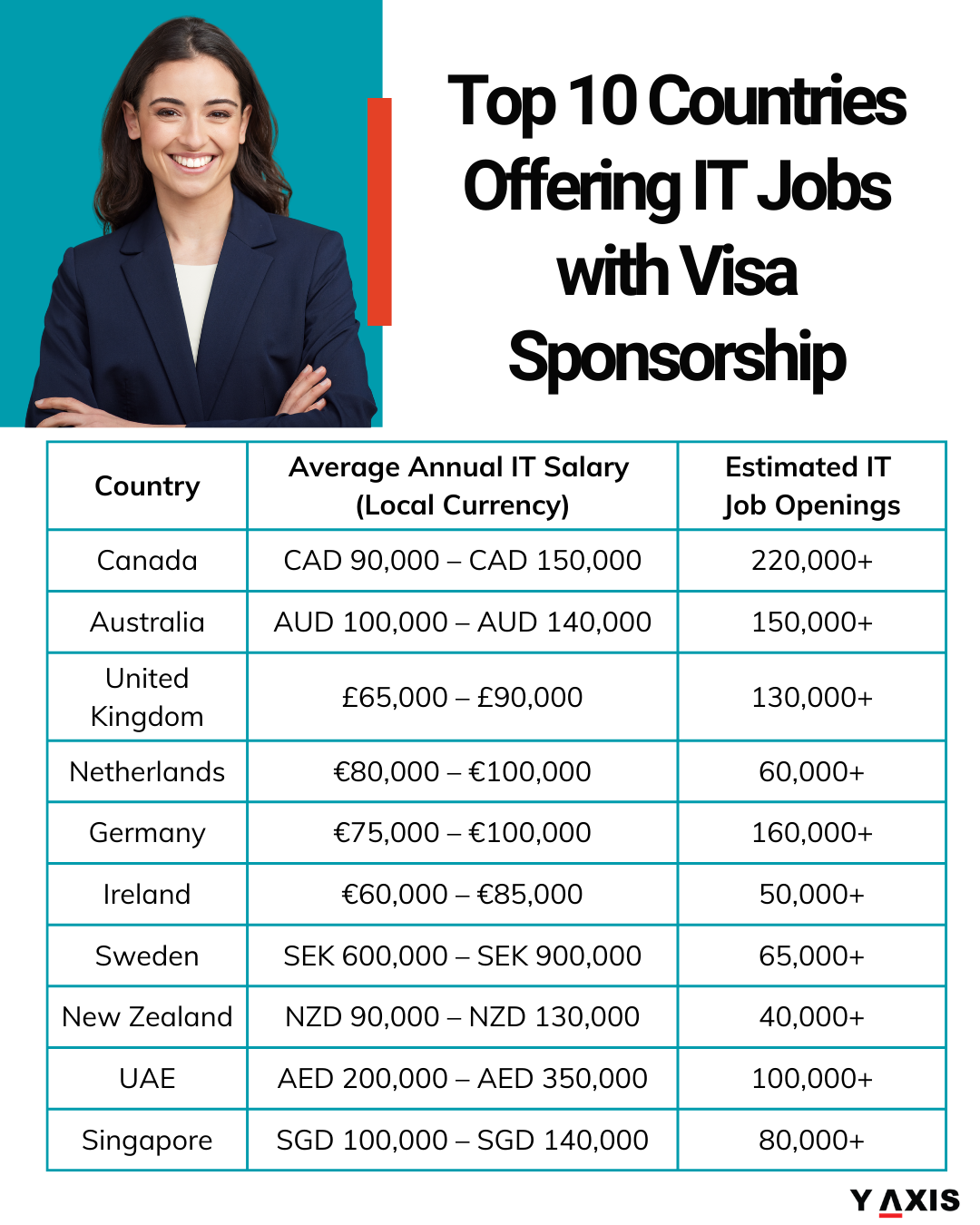
Top 10 Countries Offering IT Jobs with Visa Sponsorship
Top 10 Countries Offering IT Jobs with Visa Sponsorship
The top countries offering IT jobs with visa sponsorship include Canada, Germany, Australia, the United Kingdom, Singapore, the Netherlands, Ireland, Sweden, New Zealand, and the United Arab Emirates (UAE). These countries actively hire international IT talent to fill shortages in their growing technology sectors.
Demand is particularly high for roles such as software developers, cloud engineers, data scientists, cybersecurity specialists, and AI engineers as companies continue investing in artificial intelligence, cloud computing, and digital infrastructure. According to the World Economic Forum (WEF), the global economy could face a shortage of over 85 million tech professionals by 2030. To address this gap, many employers are recruiting international IT professionals through visa sponsorship programs, offering competitive salaries, relocation support, and long-term career opportunities.
*Planning to work abroad as an IT professional? Avail Y-Axis Resume Marketing Services to find IT jobs with visa sponsorship faster.
Top 10 Countries Hiring IT Professionals with Visa Sponsorship
The top countries hiring IT professionals with visa sponsorship include Canada, Germany, the United Kingdom, Australia, and the Netherlands. These countries actively recruit international tech talent to address skill shortages as their technology sectors continue to grow.
According to industry projections, employment for software developers is expected to grow by about 25% over the next decade, increasing the demand for skilled IT professionals worldwide. Due to ongoing labour shortages, many companies sponsor work visas to hire international experts in roles such as software development, cloud computing, cybersecurity, and data science.
List of the top 10 countries offering IT jobs with visa sponsorship:
|
Country |
Average Annual IT Salary |
Estimated IT |
|
Canada |
CAD 90,000 – CAD 150,000 |
220,000+ |
|
Australia |
AUD 100,000 – AUD 140,000 |
150,000+ |
|
United Kingdom |
£65,000 – £90,000 |
130,000+ |
|
Netherlands |
€80,000 – €100,000 |
60,000+ |
|
Germany |
€75,000 – €100,000 |
160,000+ |
|
Ireland |
€60,000 – €85,000 |
50,000+ |
|
Sweden |
SEK 600,000 – SEK 900,000 |
65,000+ |
|
New Zealand |
NZD 90,000 – NZD 130,000 |
40,000+ |
|
UAE |
AED 200,000 – AED 350,000 |
100,000+ |
|
Singapore |
SGD 100,000 – SGD 140,000 |
80,000+ |
*Want to work abroad? Avail Y-Axis Resume Marketing Services to find IT jobs with visa sponsorship faster.
Best Countries Offering IT Jobs with Visa Sponsorship
The best countries for IT jobs with visa sponsorship include Canada, Germany, the United Kingdom, Australia, and the Netherlands. These countries have strong demand for IT professionals and many employers sponsor work visas to hire international talent.
Below are some of the best countries offering IT jobs with visa sponsorship, including key details on salaries, demand, and job opportunities for IT professionals.
IT Jobs with Visa Sponsorship in Canada
Canada is a top destination for IT professionals seeking visa-sponsored jobs. Major tech hubs like Toronto, Vancouver, and Montreal have rapidly growing technology industries. Strong investments in artificial intelligence, fintech, and cloud computing are driving demand for IT job roles such as software developers, cloud engineers, data analysts, and cybersecurity specialists, with experienced professionals earning over CAD 150,000 annually.
Many Canadian companies recruit international tech talent through visa sponsorship programs and employer-sponsored work permits. Fast-track options like the Global Talent Stream help employers hire skilled professionals quickly. Canada also offers fast-track hiring with competitive salaries and clear pathways to permanent residency through programs such as Express Entry, making it a strong destination for IT professionals seeking long-term career opportunities abroad.
|
Factor |
Details |
|
IT Job Market Outlook |
Canada’s IT job market remains strong, with over 220,000 IT job openings expected over the next decade, creating strong opportunities for international professionals through visa sponsorship programs. |
|
Major Tech Cities |
Toronto, Vancouver, Montreal, Ottawa, Calgary, Waterloo |
|
Top Hiring Companies |
Shopify, Amazon, Microsoft, Google, IBM, Accenture, Deloitte, RBC, TD, CGI |
|
In-Demand IT Roles |
Software Developers, Cloud Engineers, Data Engineers, AI/ML Engineers, Cybersecurity Specialists |
|
Visa Sponsorship Programs |
Employer-sponsored work permits, Global Talent Stream (GTS), Temporary Foreign Worker Program (TFWP) |
|
Fast-Track Work Visa Options |
The Global Talent Stream allows employers to process work permits in around two weeks for eligible tech roles. |
|
Benefits for Family Members |
Spouses may receive open work permits, and children can access public education and healthcare. |
|
Permanent Residency Pathways |
Express Entry, Canadian Experience Class (CEC), Provincial Nominee Programs (PNPs), Atlantic Immigration Program (AIP) |
*Want to Work in Canada? Let Y-Axis guide you through application process.
IT Jobs with Visa Sponsorship in Germany
Germany is one of Europe’s leading destinations for IT professionals seeking visa-sponsored jobs. The country has a strong technology sector, with major tech hubs in Berlin, Munich, Frankfurt, and Hamburg. Growing demand for digital transformation, artificial intelligence, and cloud technologies continues to create opportunities for skilled tech professionals. IT job roles such as software developers, DevOps engineers, data scientists, IT consultants, and cybersecurity specialists are in high demand across the country. Experienced IT professionals can earn more than €90,000 per year depending on their role and experience.
Many international companies and startups actively recruit global talent through fast-track hiring options such as employer-sponsored work permits and programs such as the EU Blue Card, which also provides pathways to long-term residence in Germany.
|
Factor |
Details |
|
IT Job Market Outlook |
Germany’s IT job market remains strong, with over 160,000 IT job openings expected over the next decade, driven by digital transformation and shortages of skilled technology professionals. |
|
Major Tech Cities |
Berlin, Munich, Frankfurt, Hamburg, Stuttgart |
|
Top Hiring Companies |
SAP, Siemens, Bosch, BMW, Volkswagen, Deutsche Telekom, Accenture |
|
In-Demand IT Roles |
Software Developers, Cloud Engineers, Data Engineers, AI Specialists, Cybersecurity Specialists, DevOps Engineers |
|
Visa Sponsorship Programs |
Employer-sponsored visas such as the EU Blue Card, German Skilled Worker Visa, and the Opportunity Card (Chancenkarte) for skilled professionals. |
|
Fast-Track Work Visa Options |
The Accelerated Skilled Worker Procedure (ASVP) allows German employers to speed up visa processing for qualified international professionals. |
|
Benefits for Family Members |
Spouses and dependent children can accompany the primary applicant. Spouses may receive work rights, and families can access public education and healthcare. |
|
Permanent Residency Pathways |
Skilled professionals may qualify for permanent residence after a period of employment, particularly through the EU Blue Card pathway. |
*Want to Work in Germany? Let Y-Axis guide you through every step of the process.
IT Jobs with Visa Sponsorship in Australia
Australia is a popular destination for IT professionals seeking visa-sponsored jobs due to its expanding digital economy. Major tech hubs such as Sydney, Melbourne, and Brisbane host a growing number of technology companies and startups. Strong demand for digital services, cybersecurity, and cloud technologies continues to create opportunities for skilled tech professionals. IT job roles such as software developers, cloud engineers, data scientists, cybersecurity specialists, and IT project managers are in high demand across the country. Experienced IT professionals can earn more than AUD 120,000 per year depending on their role and experience.
Many employers hire international professionals through fast-track hiring options such as employer-sponsored work visas and skilled migration programs. Australia also offers pathways to permanent residency, making it an attractive destination for IT professionals seeking long-term career growth.
|
Factor |
Details |
|
IT Job Market Outlook |
Australia’s IT job market remains strong, with over 150,000 IT job openings expected over the next decade, creating opportunities for international professionals through visa sponsorship programs. |
|
Major Tech Cities |
Sydney, Melbourne, Brisbane, Canberra, Perth |
|
Top Hiring Companies |
Atlassian, Canva, Accenture, Deloitte, PwC, IBM, Infosys, TCS, Commonwealth Bank |
|
In-Demand IT Roles |
Software Developers, Cloud Engineers, Data Engineers, Cybersecurity Specialists, DevOps Engineers, AI/ML Engineers |
|
Visa Sponsorship Programs |
Employer-sponsored visas such as the Skills in Demand Visa (Subclass 482) and the Employer Nomination Scheme (Subclass 186) |
|
Fast-Track Work Visa Options |
The Skills in Demand Visa (Subclass 482) allows Australian employers to sponsor skilled international professionals for eligible IT occupations. |
|
Benefits for Family Members |
Spouses and dependent children can accompany the primary applicant. Spouses may receive work rights, and children can access education and healthcare services. |
|
Permanent Residency Pathways |
Skilled Independent Visa (Subclass 189), Skilled Nominated Visa (Subclass 190), Employer Nomination Scheme (Subclass 186), Skilled Work Regional Visa (Subclass 491) |
*Planning to Work in Australia? Let Y-Axis guide you through every step of the process.
IT Jobs with Visa Sponsorship in the United Kingdom
The United Kingdom is a major destination for IT professionals seeking visa-sponsored jobs, with a strong technology sector and global tech companies. Key tech hubs such as London, Manchester, and Cambridge offer growing job opportunities in software development, fintech, artificial intelligence, and cybersecurity.
Roles such as software developers, cloud engineers, data scientists, and cybersecurity specialists are in high demand across the UK. Experienced IT professionals can earn more than £90,000 per year depending on their role and experience. Many companies hire international talent through fast-track hiring options such as the Skilled Worker visa, which allows employers to sponsor qualified IT professionals. The UK job market also offers competitive salaries and opportunities to work with leading global tech firms, making it an attractive destination for IT professionals seeking international career growth.
|
Factor |
Details |
|
IT Job Market Outlook |
The UK’s IT job market remains strong, with over 130,000 IT job openings expected over the next decade, driven by digital transformation, AI adoption, and increasing demand for skilled technology professionals. |
|
Major Tech Cities |
London, Manchester, Birmingham, Leeds, Bristol, Edinburgh |
|
Top Hiring Companies |
Google, Amazon, Microsoft, Meta, IBM, Accenture, Deloitte, PwC, Barclays, HSBC |
|
In-Demand IT Roles |
Software Developers, Cloud Engineers, Data Engineers, AI & Machine Learning Engineers, Cybersecurity Specialists, DevOps Engineers |
|
Visa Sponsorship Programs |
Employer-sponsored visas such as the Skilled Worker Visa, Scale-up Visa, and Global Talent Visa for highly skilled professionals. |
|
Fast-Track Work Visa Options |
The Skilled Worker Visa allows UK employers to sponsor international IT professionals for eligible occupations listed in the UK Skilled Worker visa occupation list. |
|
Benefits for Family Members |
Spouses and dependent children can accompany the primary applicant. Spouses may receive work rights, and children can access public education and NHS healthcare services. |
|
Permanent Residency Pathways |
Eligible professionals can apply for Indefinite Leave to Remain (ILR) after meeting the required residence period. |
* Want to Work in the UK? Let Y-Axis guide you through the steps.
IT Jobs with Visa Sponsorship in Singapore
Singapore is one of Asia’s leading technology hubs and a popular destination for IT professionals seeking visa-sponsored jobs. The country has a strong digital economy, with major investments in fintech, artificial intelligence, and cloud technologies. Key business districts and tech centers host many multinational technology companies and fast-growing startups.
Roles such as software developers, cloud engineers, data scientists, cybersecurity specialists, and AI engineers are in high demand. Experienced IT professionals can earn more than SGD 120,000 per year depending on their role and experience. Many global companies hire international professionals through the Employment Pass, a work visa designed for skilled foreign workers. With competitive salaries and a thriving tech ecosystem, Singapore offers excellent career opportunities for IT professionals seeking global experience and long-term residence options abroad.
|
Factor |
Details |
|
IT Job Market Outlook |
Singapore’s IT job market remains strong, with over 55,000 IT job openings expected over the next decade, driven by growth in fintech, artificial intelligence, cloud computing, and digital services. |
|
Major Tech Cities |
Singapore |
|
Top Hiring Companies |
Google, Amazon, Microsoft, Grab, Shopee, DBS Bank, Accenture, IBM |
|
In-Demand IT Roles |
Software Developers, Cloud Engineers, Data Engineers, AI Specialists, Cybersecurity Specialists, DevOps Engineers |
|
Visa Sponsorship Programs |
Employer-sponsored visas such as the Employment Pass (EP) and S Pass for skilled international professionals. |
|
Fast-Track Work Visa Options |
The Employment Pass (EP) allows companies in Singapore to hire and sponsor qualified foreign professionals for IT and technology roles. |
|
Benefits for Family Members |
Eligible professionals may bring spouses and children through Dependant’s Passes, allowing families to live in Singapore. |
|
Permanent Residency Pathways |
Skilled professionals may apply for Singapore Permanent Residency (PR) through the PTS (Professionals/Technical Personnel & Skilled Workers) Scheme. |
*Want to Work in Singapore? Let Y-Axis guide you through every step of the process.
IT Jobs with Visa Sponsorship in the Netherlands
The Netherlands is a leading European destination for IT professionals seeking visa-sponsored jobs. The country has a strong digital economy, with major tech hubs in Amsterdam, Eindhoven, and Rotterdam. Rapid growth in fintech, artificial intelligence, and cloud technologies continues to drive demand for skilled IT professionals. Roles such as software developers, data engineers, cloud architects, and cybersecurity specialists are widely sought after. Experienced IT professionals can earn more than €90,000 per year depending on their role and experience.
Many international companies hire global talent through fast-track work visas such as the Highly Skilled Migrant Program, which allows employers to sponsor qualified professionals. With a strong startup ecosystem and opportunities at global tech firms, the Netherlands offers excellent career prospects for IT professionals seeking permanent residence and job opportunities in Europe.
|
Factor |
Details |
|
IT Job Market Outlook |
The Netherlands’ IT job market remains strong, with over 60,000 IT job openings expected over the next decade, driven by digitalisation and continued growth in the technology sector. |
|
Major Tech Cities |
Amsterdam, Eindhoven, Rotterdam, Utrecht |
|
Top Hiring Companies |
ASML, Philips, Booking.com, ING, Adyen, Shell, Accenture |
|
In-Demand IT Roles |
Software Developers, Cloud Engineers, Data Engineers, AI Specialists, Cybersecurity Specialists, DevOps Engineers |
|
Visa Sponsorship Programs |
Employer-sponsored visas such as the Highly Skilled Migrant Visa, EU Blue Card, and Orientation Year Visa for skilled professionals. |
|
Fast-Track Work Visa Options |
The Highly Skilled Migrant Visa allows Dutch employers to sponsor international professionals for eligible IT roles. |
|
Benefits for Family Members |
Spouses and dependent children can accompany the primary applicant. Spouses may receive work rights, and families can access education and healthcare services. |
|
Permanent Residency Pathways |
Skilled professionals may qualify for permanent residence after meeting employment and residence requirements. |
*Want to Work in Netherlands? Let Y-Axis guide you through every step of the process.
IT Jobs with Visa Sponsorship in Ireland
Ireland has become one of Europe’s fastest-growing technology hubs and a popular destination for IT professionals seeking visa-sponsored jobs. Major tech centers such as Dublin, Cork, and Galway host the European headquarters of many global technology companies. Strong growth in cloud computing, artificial intelligence, and data analytics continues to increase demand for skilled IT professionals.
Roles such as software developers, cloud engineers, data scientists, and cybersecurity specialists are widely sought after. Experienced professionals can earn more than €95,000 per year depending on their role and experience. Many employers hire international talent through the Critical Skills Employment Permit, which allows companies to sponsor skilled workers. Irish job market also offers competitive salaries and pathways to long-term residence for qualified professionals.
|
Factor |
Details |
|
IT Job Market Outlook |
Ireland’s IT job market remains strong, with over 50,000 IT job openings expected over the next decade, driven by digital expansion and the presence of major global technology companies. |
|
Major Tech Cities |
Dublin, Cork, Galway, Limerick |
|
Top Hiring Companies |
Google, Meta, Microsoft, Apple, Amazon, Intel, Accenture, Deloitte |
|
In-Demand IT Roles |
Software Developers, Cloud Engineers, Data Engineers, Cybersecurity Specialists, DevOps Engineers, AI Specialists |
|
Visa Sponsorship Programs |
Employer-sponsored permits such as the Critical Skills Employment Permit and Intra-Company Transfer (ICT) Permit for skilled professionals. |
|
Fast-Track Work Visa Options |
The Critical Skills Employment Permit allows Irish employers to sponsor highly skilled international professionals for eligible IT occupations. |
|
Benefits for Family Members |
Spouses and dependent children can accompany the primary applicant. Spouses may receive work rights, and families can access education and healthcare services. |
|
Permanent Residency Pathways |
Skilled professionals may qualify for long-term residence or permanent residency after meeting employment requirements. |
*Want to Work in Ireland? Let Y-Axis guide you through every step of the process.
IT Jobs with Visa Sponsorship in Sweden
Sweden is a leading European destination for IT professionals seeking visa-sponsored jobs. The country has a strong technology sector, with major tech hubs in Stockholm, Gothenburg, and Malmö. Strong demand for digital innovation, artificial intelligence, and cloud technologies continues to create opportunities for skilled IT professionals. Roles such as software developers, data scientists, cloud engineers, and cybersecurity specialists are in high demand across Sweden. Experienced IT professionals can earn more than SEK 900,000 per year depending on their role and experience.
Many international companies and startups recruit global talent through fast-track hiring options such as employer-sponsored work permits. With a thriving startup ecosystem and well-known tech companies like Spotify and Klarna, Swedish job market offers excellent career opportunities for IT professionals seeking global experience.
|
Factor |
Details |
|
IT Job Market Outlook |
Sweden’s IT job market remains strong, with over 50,000 IT job openings expected over the next decade, driven by digital innovation and demand for skilled technology professionals. |
|
Major Tech Cities |
Stockholm, Gothenburg, Malmö |
|
Top Hiring Companies |
Spotify, Ericsson, Volvo Group, Klarna, Accenture, IBM |
|
In-Demand IT Roles |
Software Developers, Cloud Engineers, Data Engineers, AI Specialists, Cybersecurity Specialists, DevOps Engineers |
|
Visa Sponsorship Programs |
Employer-sponsored Sweden Work Permit for Highly Skilled Professionals, allowing companies to hire international professionals for eligible roles. |
|
Fast-Track Work Visa Options |
The Swedish Work Permit allows employers to sponsor qualified international professionals for skilled IT occupations. |
|
Benefits for Family Members |
Spouses and dependent children can accompany the primary applicant. Spouses may receive work rights, and families can access education and healthcare services. |
|
Permanent Residency Pathways |
Skilled professionals may apply for permanent residence after several years of legal employment and residence in Sweden. |
*Want to Work in Sweden? Let Y-Axis guide you through every step of the process.
IT Jobs with Visa Sponsorship in New Zealand
New Zealand is an emerging destination for IT professionals seeking visa-sponsored jobs. The country has a growing technology sector, with major tech hubs in Auckland, Wellington, and Christchurch. Increasing demand for digital services, cloud computing, and cybersecurity continues to create opportunities for skilled IT professionals.
Roles such as software developers, cloud engineers, data analysts, and cybersecurity specialists are in high demand. Experienced IT professionals can earn more than NZD 120,000 per year depending on their role and experience. Many employers recruit international professionals through employer-sponsored work visas and the Accredited Employer Work Visa (AEWV) program. With competitive salaries, permanent residence pathways and a strong work-life balance, New Zealand offers attractive opportunities for IT professionals seeking global career growth.
|
Factor |
Details |
|
IT Job Market Outlook |
New Zealand’s IT job market continues to grow, with over 40,000 IT job openings expected over the next decade, driven by digital transformation and increasing demand for skilled technology professionals. |
|
Major Tech Cities |
Auckland, Wellington, Christchurch |
|
Top Hiring Companies |
Xero, Datacom, Spark New Zealand, IBM, Microsoft, Accenture, Deloitte |
|
In-Demand IT Roles |
Software Developers, Cloud Engineers, Data Engineers, Cybersecurity Specialists, DevOps Engineers, AI Specialists |
|
Visa Sponsorship Programs |
Employer-sponsored visas such as the Accredited Employer Work Visa (AEWV) allow companies to sponsor skilled international professionals. |
|
Fast-Track Work Visa Options |
The Accredited Employer Work Visa (AEWV) enables approved employers to hire international professionals for eligible IT roles. |
|
Benefits for Family Members |
Spouses and dependent children can accompany the primary applicant. Spouses may receive work rights, and children can access education and healthcare services. |
|
Permanent Residency Pathways |
Skilled professionals may qualify for residence through the Skilled Migrant Category Resident Visa after meeting eligibility requirements. |
*Want to Work in New Zealand? Let Y-Axis guide you through every step of the process.
IT Jobs with Visa Sponsorship in the United Arab Emirates (UAE)
The United Arab Emirates has become a major technology hub in the Middle East, attracting IT professionals from around the world. Cities such as Dubai and Abu Dhabi host rapidly growing tech sectors supported by strong government initiatives in artificial intelligence, smart cities, and digital transformation. IT job roles such as software developers, cloud engineers, cybersecurity specialists, and data analysts are in high demand. Experienced IT professionals can earn more than AED 350,000 per year, with the added benefit of tax-free income.
Many multinational companies and regional tech firms hire international professionals through employer-sponsored work permits. With fast-track hiring options, competitive salaries, modern infrastructure, and growing tech investments, the UAE offers attractive opportunities for IT professionals seeking careers in the global technology industry.
|
Factor |
Details |
|
IT Job Market Outlook |
The UAE’s IT job market is expanding rapidly, with over 100,000 IT job openings expected over the next decade, driven by digital transformation and smart government initiatives. |
|
Major Tech Cities |
Dubai, Abu Dhabi, Sharjah |
|
Top Hiring Companies |
Amazon, Microsoft, Google, Oracle, SAP, Accenture, IBM, Emirates Group |
|
In-Demand IT Roles |
Software Developers, Cloud Engineers, AI Specialists, Data Engineers, Cybersecurity Specialists, DevOps Engineers |
|
Visa Sponsorship Programs |
Employer-sponsored visas such as the UAE Work Visa, Green Visa, and Golden Visa for highly skilled professionals. |
|
Fast-Track Work Visa Options |
Employer-sponsored UAE Work Visas allow companies to hire international IT professionals quickly through company sponsorship. |
|
Benefits for Family Members |
Spouses and dependent children can obtain family residence visas, allowing them to live in the UAE and access education and healthcare services. |
|
Permanent Residency Pathways |
Long-term residence options include the Golden Visa, which allows skilled professionals to live and work in the UAE for extended periods. |
*Want to Work in the UAE? Avail Y-Axis Resume Marketing Services to find right job faster.
Highest-Paying IT Jobs Abroad with Visa Sponsorship
The highest-paying IT jobs with visa sponsorship are mainly found in advanced technology fields such as artificial intelligence, cloud computing, cybersecurity, and data science. Due to rapid digital transformation and global tech talent shortages, many companies sponsor work visas to hire skilled international IT professionals.
According to industry data, AI engineers can earn over $150,000 per year, while cloud architects and data scientists often earn more than $130,000 annually in major tech markets. These roles command high salaries because organizations increasingly rely on cloud platforms, automation, and data-driven technologies.
Below are some of the highest-paying IT jobs that frequently offer visa sponsorship opportunities for tech professionals.
|
IT Job Role |
Average Annual Salary (USD) |
Chances of Visa Sponsorship |
|
AI / Machine Learning Engineer |
$120,000 – $170,000 |
High |
|
Cloud Architect |
$115,000 – $160,000 |
Very High |
|
Solutions Architect |
$110,000 – $155,000 |
High |
|
Data Scientist |
$95,000 – $140,000 |
High |
|
Cybersecurity Engineer |
$90,000 – $135,000 |
High |
|
DevOps Engineer |
$90,000 – $130,000 |
High |
|
Site Reliability Engineer |
$95,000 – $135,000 |
High |
|
Big Data Engineer |
$90,000 – $125,000 |
High |
|
Cloud Engineer |
$85,000 – $120,000 |
Very High |
|
Software Engineer |
$80,000 – $115,000 |
Very High |
Eligibility Requirements for IT Jobs with Visa Sponsorship
To qualify for IT jobs with visa sponsorship, candidates must meet both employer and visa requirements, including education qualifications, technical skills, and relevant work experience. Many companies sponsor visas mainly for applicants who can fill specialized IT roles that are difficult to hire locally. Meeting these requirements can improve your chances of securing a sponsored job abroad.
Key requirements for IT jobs with visa sponsorship include:
- A bachelor’s degree in computer science, information technology, or a related field
- 2–5 years of relevant work experience in IT roles
- Strong technical skills in programming, cloud computing, cybersecurity, or data analytics
- English language proficiency for communication in international workplaces
- A job offer from an employer willing to sponsor a work visa
How to Apply for IT Jobs abroad with Visa Sponsorship?
To apply for IT jobs abroad with visa sponsorship, you need to choose the right country, meet the required qualifications, and apply through international job portals or company career websites. Many companies sponsor visas when they cannot find suitable local IT talent.
Steps to apply for IT jobs with visa sponsorship from abroad:
Step 1: Choose the right country based on IT job demand, salary levels, and visa options.
Step 2: Check eligibility requirements such as education qualifications, technical skills, and work experience.
Step 3: Prepare an international-standard resume and update your professional profiles.
Step 4: Apply through global job portals like LinkedIn, Indeed, and company career pages.
Step 5: Attend online interviews and technical assessments with potential employers.
Step 6: Receive a job offer and begin the employer-sponsored work visa process.
*Want to work abroad? Get expert guidance from Y-Axis professionals.
Key Factors to Consider When Applying for IT Jobs with Visa Sponsorship
When applying for IT jobs with visa sponsorship, it is important to understand factors that influence hiring decisions. Employers usually sponsor visas for candidates with the required qualifications and in-demand skills. Evaluating these factors can help improve your chances of securing a sponsored IT job abroad.
Key factors to consider for IT professionals include:
- Demand for your IT role in the target country
- Relevant education and work experience required by employers
- Technical skills and certifications that are in demand
- Work visa requirements and sponsorship policies in the country
- Salary levels and cost of living in the destination country
- Companies that regularly sponsor visas for international IT candidates
*Want to work abroad? Avail Y-Axis Resume Marketing Services to find IT jobs with visa sponsorship faster.
FAQs
Which countries offer the most IT jobs with visa sponsorship?
Countries offering the most IT jobs with visa sponsorship include Canada, Australia, the United Kingdom, Germany, the Netherlands, Ireland, Sweden, Singapore, New Zealand, and the UAE. These destinations have strong technology sectors and high demand for software developers, cloud engineers, cybersecurity specialists, and data engineers. Many global companies sponsor international professionals to fill skill shortages and support rapidly growing digital economies.
What are IT jobs with visa sponsorship for tech professionals?
IT jobs with visa sponsorship are roles where an employer supports a foreign professional’s work visa application to legally work in another country. Companies sponsor international tech talent when local skill shortages exist. Common sponsored roles include software developers, DevOps engineers, cybersecurity specialists, cloud engineers, and data scientists. These opportunities allow skilled professionals to work abroad while employers handle key immigration processes.
Which country is best for IT jobs with visa sponsorship?
The best countries for IT jobs with visa sponsorship include Canada, Germany, Australia, and the United Kingdom due to strong demand for skilled tech professionals and structured immigration pathways. These countries offer competitive salaries, growing technology sectors, and employer-sponsored work visa programs. Singapore and the UAE are also attractive destinations because of expanding digital economies and strong international technology hubs.
Which IT jobs are most in demand worldwide?
The most in-demand roles for IT jobs abroad with visa sponsorship include software developers, cloud engineers, cybersecurity specialists, DevOps engineers, AI engineers, and data engineers. Companies worldwide are investing heavily in cloud computing, artificial intelligence, and big data technologies. Professionals skilled in Python, Java, AWS, Azure, cybersecurity, and data analytics have strong opportunities to secure high-paying international IT jobs.
Do companies really sponsor visas for IT jobs abroad?
Yes, many global companies offer visa sponsorship for IT jobs to attract skilled professionals worldwide. Technology firms, consulting companies, financial institutions, and startups often sponsor international candidates due to talent shortages. Employers may assist with work permit applications, immigration documentation, and relocation support. Global companies such as Google, Microsoft, Amazon, SAP, and Accenture frequently hire international IT professionals.
What qualifications are needed for IT jobs with visa sponsorship?
To secure IT jobs with visa sponsorship, candidates typically need a degree in computer science, information technology, or software engineering. Employers also prioritize practical experience and technical skills. Expertise in programming languages like Python, Java, or JavaScript, along with experience in cloud computing, cybersecurity, or data analytics, can significantly increase chances of securing employer-sponsored IT jobs abroad.
How can I find IT jobs abroad with visa sponsorship?
To find IT jobs abroad with visa sponsorship, start by searching on global job platforms such as LinkedIn, Indeed, and Glassdoor. Many companies mention visa sponsorship in job listings. Target countries with strong technology demand and skilled migration programs. Networking with tech professionals, attending industry events, and building a strong resume highlighting technical skills can improve chances of getting sponsored IT jobs.
Which countries have the highest salaries for IT professionals?
Countries offering the highest salaries for IT professionals include the United States, Canada, Australia, the Netherlands, and Singapore. Experienced software engineers, cloud architects, and cybersecurity specialists can earn high salaries depending on their skills and experience. These countries have strong digital economies and global technology companies that offer competitive compensation along with visa sponsorship opportunities for international talent.
Is it easy to get a visa sponsorship for IT jobs?
Getting visa sponsorship for IT jobs is often easier compared to many other professions because of the global shortage of skilled technology professionals. However, candidates still need strong technical expertise, relevant work experience, and specialized skills. Professionals with experience in cloud computing, artificial intelligence, cybersecurity, and software engineering have higher chances of securing employer-sponsored IT jobs abroad.
Do IT jobs abroad offer relocation assistance?
Many employers offering IT jobs abroad with visa sponsorship also provide relocation assistance for international employees. This support may include visa processing, relocation allowances, temporary accommodation, and onboarding support. Some companies also help with housing, banking setup, and local documentation. These benefits help international professionals relocate smoothly and start their careers in global technology hubs.
Can my family join me on a visa-sponsored IT job?
Yes, many countries allow family members to accompany professionals working in IT jobs with visa sponsorship. Spouses and dependent children can usually apply for dependent or family visas. In several destinations, spouses may receive work authorization and children can attend local schools. Countries such as Canada, Australia, Germany, and the UK offer family-friendly immigration policies for skilled workers.
Which visa programs are common for IT professionals?
Several countries offer visa programs for IT jobs with visa sponsorship. Popular options include Canada’s Global Talent Stream, the UK Skilled Worker Visa, Germany’s EU Blue Card, Australia’s Skills in Demand Visa, and Singapore’s Employment Pass. These programs allow employers to hire international tech professionals and sponsor work permits. Many also provide long-term pathways to permanent residency.
What skills increase chances of getting IT jobs abroad?
To secure IT jobs abroad with visa sponsorship, professionals should focus on high-demand technical skills. Expertise in cloud computing, cybersecurity, artificial intelligence, DevOps, and data engineering is highly valued. Programming languages like Python, Java, JavaScript, and SQL are widely required. Experience with cloud platforms such as AWS, Microsoft Azure, and Google Cloud can significantly improve job opportunities.
Are IT jobs abroad good for career growth?
Yes, IT jobs abroad with visa sponsorship can significantly boost career growth. Working in global technology hubs provides exposure to advanced technologies, international teams, and large-scale projects. Professionals often gain higher salaries, stronger professional networks, and valuable global experience. International work experience is highly valued in the tech industry and can lead to leadership and senior roles.
What industries hire IT professionals internationally?
Several industries recruit international talent for IT jobs with visa sponsorship. Key sectors include technology companies, financial services, healthcare, e-commerce, telecommunications, and consulting firms. As businesses adopt digital technologies, demand for software development, cybersecurity, cloud infrastructure, and data analytics professionals continues to grow across industries worldwide.
Do startups sponsor visas for IT professionals?
Yes, many startups offer visa sponsorship for IT professionals, especially in major technology hubs. Startup ecosystems in cities like Toronto, Berlin, Amsterdam, London, and Singapore often hire international developers and engineers. These companies seek skilled professionals in software development, artificial intelligence, and cloud technologies to scale products and build innovative digital platforms.
What are the benefits of working in IT abroad?
Working in IT jobs abroad with visa sponsorship offers several advantages. Professionals can earn competitive salaries, gain international work experience, and access cutting-edge technologies. Many countries also offer permanent residency pathways, allowing professionals to build long-term careers abroad. Additionally, working in global tech hubs helps professionals expand their professional networks and learn from diverse teams.
Is experience required for IT jobs with visa sponsorship?
Most employers offering visa sponsorship for IT jobs prefer candidates with professional experience. Typically, companies look for 2–5 years of experience in relevant technical roles. However, highly skilled graduates with strong portfolios or specialized expertise may also secure visa-sponsored roles. Experience in areas such as cloud infrastructure, cybersecurity, artificial intelligence, and enterprise software development is especially valuable.
Which companies hire international IT professionals?
Many global companies actively recruit international candidates for IT jobs with visa sponsorship. Some well-known employers include Google, Amazon, Microsoft, IBM, SAP, Accenture, Deloitte, and major financial institutions. These organizations operate in multiple countries and frequently hire global talent to support their technology projects.
Are IT jobs abroad secure for long-term careers?
Yes, IT jobs abroad with visa sponsorship are generally considered secure and future-proof careers. Technology continues to play a central role in business operations, and demand for skilled IT professionals is expected to grow worldwide. Many countries are investing heavily in digital transformation, artificial intelligence, cybersecurity, and cloud infrastructure, ensuring continued job opportunities.
Posted on March 11 2026
Trending Article
Posted On March 31 2026
Which is the best option to move abroad: Study or Work?